Define Permaculture in Agriculture: A Comprehensive Guide
Introduction
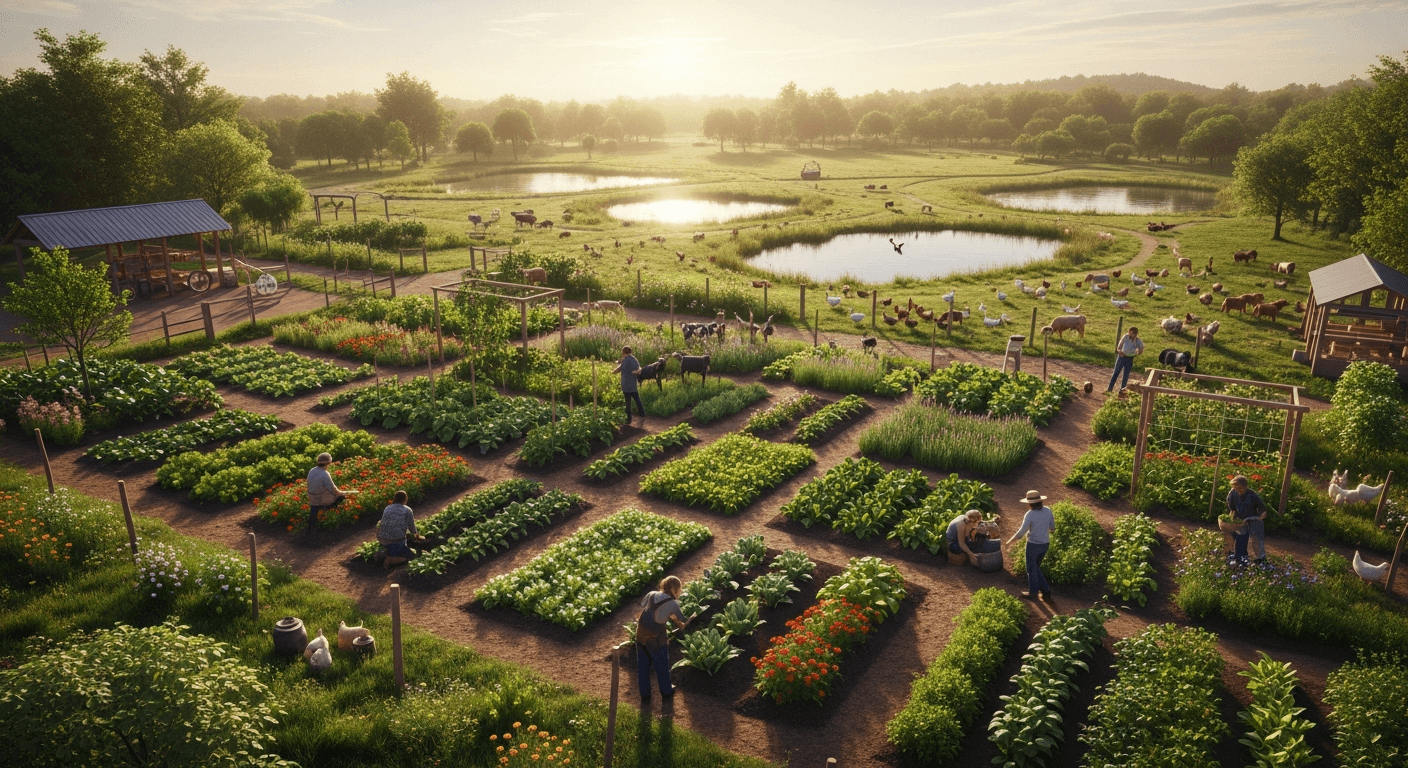
Have you ever imagined a world where your home, garden, and community work in perfect harmony with nature? This is the essence of permaculture. It's a holistic approach to living that goes beyond simple organic agriculture. Permaculture design uses the patterns of natural ecosystems to create self-sustaining systems for food, shelter, and community. This guide will walk you through what permaculture is, its core principles, and how you can apply it to create a more resilient and sustainable life, no matter where you live.
Defining Permaculture in Agriculture
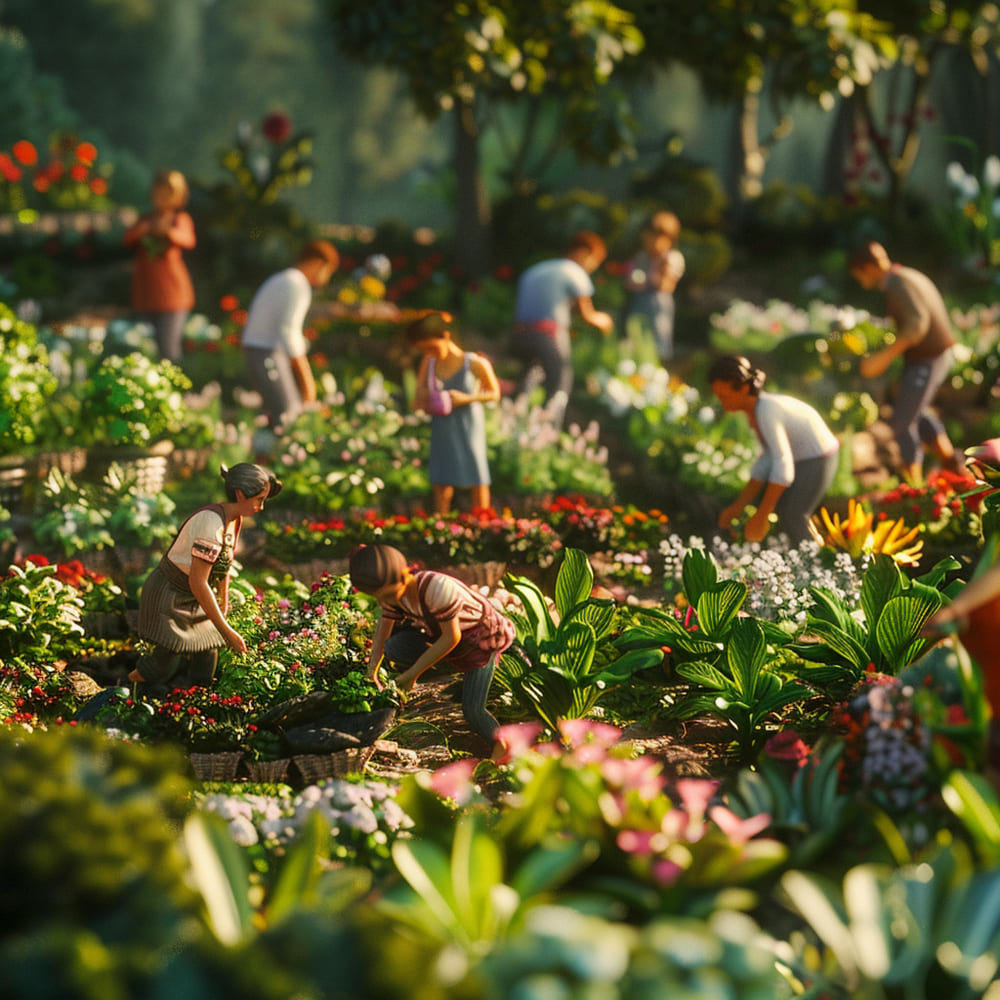
To a beginner, permaculture can be explained as a design system that mimics nature to create sustainable living environments. Unlike organic farming, which focuses on chemical-free techniques, permaculture integrates every element---soil, water, plants, animals, and people---into one cohesive, self-regulating system. The word permaculture itself is a blend of "permanent agriculture" and "permanent culture."
This approach offers a holistic philosophy for land use, recycling, and low-impact living. The goal of permaculture design is to produce food and resources in a non-destructive way, creating a harmonious relationship between human activity and the natural world. Let's explore its meaning, origins, and the key figures behind this transformative movement.
What Does "Permaculture" Mean?
The term permaculture is a portmanteau, combining "permanent agriculture" and "permanent culture." Initially, it focused on creating stable agricultural systems that could last indefinitely without depleting natural resources. However, the founders quickly realized that a truly sustainable system must also include social aspects, leading to the inclusion of "permanent culture."
This expanded definition highlights that the essence of permaculture is not just about gardening or farming; it's a holistic design philosophy for creating resilient human settlements. It's about building communities and lifestyles that can endure and thrive over the long term by working with nature, not against it.
As detailed in early permaculture literature, this means integrating land, resources, people, and the environment through mutually beneficial synergies. It's a way of thinking that connects every part of our lives, from the food we eat to the communities we build, into a single, sustainable whole.
The Origin and Evolution of Permaculture
The concept of permaculture began in the mid-1970s in Australia. It was developed by university professor Bill Mollison and his graduate student, David Holmgren. They were concerned about the destructive impacts of modern industrial agriculture, which was poisoning land and water, reducing biodiversity, and causing massive soil erosion.
In response, they started developing ideas for stable agricultural systems that could work in harmony with nature. Their collaborative efforts led to the publication of Permaculture One in 1978, a book that officially launched the permaculture movement and introduced their innovative approach to the world.
From these origins, permaculture has evolved from a focus on agriculture to a comprehensive design system for sustainable living. It has grown into a global movement, with people from all walks of life applying its principles to create regenerative systems in their homes, farms, and communities.
Key Figures in the Permaculture Movement

The permaculture movement owes its existence to two pioneering Australians, Bill Mollison and David Holmgren. Their vision and work laid the foundation for the principles and practices that define permaculture today.
-
Bill Mollison (1928--2016): Often called the "father of permaculture," Mollison was a researcher, author, and teacher who co-developed the permaculture concept. He traveled the world teaching the permaculture design course, spreading its ideas and helping establish a global network of practitioners. His book, Permaculture: A Designer's Manual, remains a foundational text for anyone serious about creating a permaculture system.
-
David Holmgren: As Mollison's student, Holmgren was instrumental in formalizing the principles of permaculture. His 2002 book, Permaculture: Principles & Pathways Beyond Sustainability, articulated the twelve design principles that are now central to permaculture education and practice.
Together, these two figures transformed a critical observation about modern agriculture's failings into a positive, solutions-based movement. Their work continues to inspire thousands to design more sustainable and resilient lives.
Core Ethics of Permaculture
At the heart of permaculture are three simple yet profound ethics: Earth care, people care, and fair share. These ethics form the moral foundation of the entire system, guiding all permaculture principles and decisions. They provide a framework for responsible stewardship of our planet and its resources, encouraging us to think beyond our individual needs.
These ethics distinguish permaculture from other farming methods by emphasizing a deep sense of responsibility toward the environment and the global community. They challenge us to create systems that not only provide for our own existence but also ensure that all life can continue to thrive. We will now explore each of these ethical pillars in more detail.
Earth Care as an Ethical Foundation
The first ethic, Earth care, is the foundation of permaculture. It recognizes that all life systems are interconnected and that we have a responsibility to care for the planet. This principle calls for the provision for all life systems to continue and multiply, from the smallest microbes in the soil to the largest forests.
In practice, Earth care means actively working to improve soil health, conserve water, and protect biodiversity. It involves designing systems that mimic natural ecosystems, which are inherently regenerative and self-sustaining. By prioritizing the health of the Earth, we create the conditions for long-term environmental sustainability.
This ethical commitment is a primary reason why permaculture is considered a sustainable farming approach. Instead of extracting from the land, permaculture seeks to build and regenerate it, ensuring that our agricultural practices contribute positively to the health of the planet for future generations.
People Care in Sustainable Systems
The second ethic, people care, ensures that our designs meet fundamental human needs. This principle acknowledges that for a system to be truly sustainable, it must support the people within it. It's about providing for people so they can access the resources necessary for their existence, including food, shelter, education, and meaningful work.
Applying this ethic goes beyond just physical needs. It also involves fostering strong human relationships and building community resilience. A permaculture design should create environments where people feel connected, supported, and empowered. It's about designing systems that nurture our well-being just as much as they nurture the land.
In agriculture, the people care ethic translates into creating farms that are not only productive but also provide healthy livelihoods and foster strong community ties. It emphasizes collaboration and cooperation, recognizing that our collective well-being is intertwined with the health of our relationships and our environment.
Fair Share and Resource Management
The third ethic, fair share, is about setting limits to our consumption and redistributing surplus resources. This principle recognizes that the Earth's resources are finite and that we must manage them wisely to ensure there is enough for everyone, including future generations and other species. It encourages us to take only what we need and share what we don't.
By governing our own needs, we can set resources aside to support the first two principles of Earth care and people care. This ethic promotes a mindset of abundance rather than scarcity, where surplus is seen as an opportunity to give back. Practical applications of fair share include:
-
Reinvesting surplus time, money, and energy into community projects.
-
Making better use of local resources to reduce waste and dependence on external inputs.
-
Prioritizing the use of renewable resources to minimize our ecological footprint.
This commitment to equitable resource management is another key reason why permaculture is considered a sustainable approach. It ensures that the benefits of our systems are shared widely, contributing to a more just and resilient world.
Main Principles of Permaculture
Beyond the core ethics, permaculture is guided by a set of design principles that provide a practical framework for creating sustainable systems. These permaculture principles, most famously articulated by co-founder David Holmgren, are thinking tools that help us work with nature rather than against it. They are adaptable and can be applied in any climate or at any scale.
These principles encourage us to observe our environment, catch and store energy, use small and slow solutions, and produce no waste. They are designed to help us create systems that are productive, resilient, and self-regulating. Next, we'll look at Holmgren's twelve principles and their practical applications in modern farming.
Holmgren's Permaculture Design Principles
David Holmgren, co-originator of the permaculture concept, articulated twelve permaculture design principles that serve as guidelines for creating sustainable systems. These principles are intended to help people observe and mimic natural patterns to build productive environments that are in harmony with nature.
They emphasize thoughtful observation and interaction, seeing solutions in problems, and designing systems that are efficient and self-reliant. The principles encourage us to move from a problem-focused mindset to a solutions-focused one, using nature as our guide.
Here is a summary of Holmgren's twelve principles:
Principle Core Idea 1. Observe and Interact Thoughtfully observe nature and society to design effective solutions. 2. Catch and Store Energy Develop systems to collect and store resources when they are abundant. 3. Obtain a Yield Ensure that you are getting truly useful rewards as part of the work. 4. Apply Self-Regulation and Accept Feedback Discourage inappropriate activity to ensure systems can function well. 5. Use and Value Renewable Resources and Services Make the best use of nature's abundance to reduce consumption and dependence. 6. Produce No Waste Value and use all available resources; nothing is a waste. 7. Design from Patterns to Details Observe patterns in nature and society and use them as a design backbone. 8. Integrate Rather than Segregate By putting the right things in the right place, relationships develop between them. 9. Use Small and Slow Solutions Small and slow systems are easier to maintain and have more sustainable outcomes. 10. Use and Value Diversity Diversity reduces vulnerability to a variety of threats and takes advantage of the unique nature of the environment. 11. Use Edges and Value the Marginal The interface between things is where the most interesting events take place. 12. Creatively Use and Respond to Change Have a positive impact on inevitable change by observing and intervening at the right time.
Practical Applications of Principles in Modern Farming
Applying permaculture principles in modern farming transforms how we manage land and produce food. For example, "Catch and Store Energy" can be seen in the use of swales to capture rainwater in the soil or using passive solar greenhouses to extend the growing season. This reduces reliance on irrigation and external heating.
Another principle, "Integrate Rather than Segregate," is applied by creating food forests where fruit trees, shrubs, herbs, and ground cover plants are grown together. This mimics a natural forest ecosystem, creating a resilient and low-maintenance system that supports a wide range of life. A permaculture farm becomes a web of interconnected relationships.
Ultimately, these principles guide our daily choices, from how we build our soil to how we interact with our community. They encourage farmers to become designers who observe, adapt, and innovate, leading to agricultural systems that are not only productive but also regenerative and truly sustainable for the long term.
Permaculture Design vs. Conventional Agricultural Design
The design approach is where permaculture truly diverges from conventional agriculture. Conventional systems often prioritize short-term yield and efficiency through monoculture and heavy reliance on external inputs like synthetic fertilizers and pesticides. This approach tends to degrade soil, reduce biodiversity, and create dependency.
In contrast, permaculture design focuses on creating closed-loop, self-sustaining ecosystems. It seeks to build long-term resilience by working with natural processes. The goal is to create a farm that functions more like a healthy, diverse forest than a factory. Key differences in design philosophy include:
-
Diversity over Monoculture: Permaculture embraces polycultures, where multiple species are grown together to create beneficial relationships.
-
Building Soil Health: While conventional agriculture can deplete soil, permaculture actively builds soil fertility and organic matter through techniques like composting and no-till farming.
-
Working with Nature: Permaculture designs are tailored to the specific landscape, climate, and resources of a site, whereas conventional designs often impose a one-size-fits-all model.
This fundamental shift in mindset from dominating nature to collaborating with it is the core distinction between the two approaches.
Permaculture Define: How It Differs from Traditional Agriculture
Permaculture is fundamentally different from traditional and conventional agriculture in its core philosophy and design system. While traditional farming often focuses on maximizing the yield of a single crop, permaculture seeks to create diverse, resilient, and self-sustaining systems that mimic natural ecosystems. It's a holistic approach that values the relationships between all elements of a farm.
This approach is what makes permaculture a deeply sustainable practice. Instead of depleting resources, it aims to regenerate them by building soil, conserving water, and enhancing biodiversity. The emphasis is on long-term stability rather than short-term gains. Let's delve into the key distinctions in methods and the benefits this approach offers.
Key Distinctions in Methods and Mindset
The differences between permaculture and traditional agriculture stem from a fundamental shift in mindset. Traditional agriculture often operates on a linear model of inputs and outputs, whereas permaculture uses a cyclical, whole-systems approach. It's about protracted and thoughtful observation rather than protracted and thoughtless labor.
This mindset leads to distinct methods. For example, instead of relying on synthetic fertilizers, a permaculture system builds fertility through composting, cover cropping, and integrating animals. The focus is always on creating stable agricultural systems that can sustain themselves over time by leveraging natural processes.
Some key distinctions include:
-
Resource Use: Permaculture prioritizes renewable resources and aims to create closed-loop systems where waste from one element becomes food for another.
-
Diversity: It embraces polycultures and biodiversity, in contrast to the monocultures common in traditional farming.
-
Design Philosophy: Permaculture principles guide the design of a site to work with its unique characteristics, creating a system that is resilient and adapted to its environment.
Benefits Over Conventional Farming Approaches
The benefits of permaculture over conventional farming are significant, particularly in the context of long-term sustainability and resilience. One of the most important advantages is the focus on building and maintaining soil fertility. Through practices like mulching, composting, and no-till gardening, permaculture actively regenerates the soil, leading to healthier plants and more nutritious food production.
This approach also enhances biodiversity. By creating diverse habitats, permaculture farms attract beneficial insects, birds, and other wildlife, which help with pest control and pollination naturally. This reduces the need for chemical pesticides and creates a more balanced ecosystem. It moves beyond the scope of simple organic gardening into a fully integrated system.
Furthermore, permaculture systems are often more resilient to environmental stresses like drought and disease. The diversity of plants and the focus on water conservation make them better able to withstand unpredictable conditions. This results in a more stable and secure food supply, which is a cornerstone of a sustainable agricultural model.
Common Misconceptions About Permaculture
Despite its many benefits, several misconceptions surround the permaculture movement. One common myth is that permaculture is just messy gardening or that it is anti-technology. In reality, it is a sophisticated design science that can incorporate modern, appropriate technology to create efficient systems.
Another misconception is that it is not scalable or commercially viable. While it may require more initial planning and observation, well-designed permaculture systems can be highly productive and profitable, especially when considering the reduced input costs and long-term resilience. Some common myths include:
-
It's only for hippies: Permaculture principles are being applied by a diverse range of people, from urban gardeners to large-scale farmers and community planners.
-
It requires a lot of land: Permaculture can be practiced at any scale, from a small balcony garden to a large farm.
-
It's a rigid set of rules: Permaculture is an adaptable framework of principles, not a dogmatic list of rules. It encourages creativity and local adaptation.
Understanding these misconceptions helps to see permaculture for what it truly is: a flexible, practical, and science-based approach to sustainable living.
Essential Components of Permaculture Farming
A permaculture farm is a complex, integrated system with several essential components that work together to create a thriving ecosystem. These components are designed using permaculture principles to maximize efficiency and resilience. Key elements include zoning, plant guilds, and the integration of animals into the farm design.
These components are not just a collection of techniques; they are part of a holistic design that considers the relationships between every element. From creating multi-layered food forests to implementing sophisticated water management systems, each component plays a vital role in the overall health and productivity of the farm. Let's examine some of these core building blocks.
Permaculture Zones Explained
Permaculture zones are a design tool used to organize a landscape based on the frequency of human use. This system helps to conserve energy and make the most efficient use of space by placing elements that need the most attention closest to the home.
The zones are typically numbered from 0 to 5, with Zone 0 being the home itself. Each successive zone is further away and requires less frequent interaction. This logical placement ensures that you spend your time and energy where it's most needed.
-
Zone 0: The home or central living area.
-
Zone 1: Areas visited daily, like a kitchen garden with herbs and salads.
-
Zone 2: Less frequently maintained areas, such as orchards and larger vegetable plots.
-
Zone 3: Main agricultural areas for staple crops and larger livestock.
-
Zone 4: A semi-wild area for foraging, timber, and as a buffer.
-
Zone 5: A wilderness area left untouched for observation and to support wildlife.
Understanding and implementing permaculture zones allows for a highly organized and energy-efficient design.
Establishing Guilds and Polycultures
A key practice in permaculture is the creation of guilds and polycultures. A guild is a group of plants, animals, and other elements that work together to support each other. This is a more advanced form of companion planting, where the relationships between species are intentionally designed to create a mini-ecosystem.
For example, a classic fruit tree guild might include a central fruit tree, surrounded by nitrogen-fixing shrubs, pest-repelling herbs, and ground cover plants that suppress weeds and retain moisture. Each element in the guild performs multiple functions, creating a system that is more resilient and productive than a single plant would be on its own.
Polycultures, or the practice of growing multiple crops in the same space, are the broader application of this concept. By moving away from monocultures, permaculture farms increase biodiversity, improve soil health, and reduce the risk of pests and diseases, creating a more stable and productive agricultural system.
Integrating Animals and Plants in Farm Design
Integrating animals and plants is a core component of a successful permaculture farm. In natural ecosystems, animals and plants have a symbiotic relationship, and permaculture seeks to replicate this. Animals can perform a variety of functions, from pest control and fertilization to tilling and weeding.
For example, chickens can be used in "chicken tractors" to prepare garden beds by scratching the soil, eating weeds and pests, and leaving behind valuable manure. Similarly, rotational grazing of livestock can improve pasture health, build soil, and sequester carbon. The key is to manage the integration carefully to ensure it is beneficial for both the animals and the plants.
By thoughtfully integrating animals, a permaculture farm becomes a more dynamic and self-regulating system. This approach reduces the need for external inputs like fertilizers and machinery, while creating a healthier environment for all living things on the farm, from the microbes in the soil to the tips of the plant roots.
Common Permaculture Practices on a Farm
Now that we understand the essential components, let's look at some common permaculture practices you might see on a farm. These techniques are the hands-on application of permaculture principles, designed to build soil, conserve water, and increase biodiversity. They go beyond standard organic gardening methods to create truly regenerative systems.
From building soil with sheet mulching and no-till gardening to creating unique garden beds like hügelkultur mounds, these practices are both creative and highly effective. They are the tools that permaculture designers use to bring their visions to life. Let's explore some of the most popular and impactful techniques.
Sheet Mulching and No-Till Gardening
Sheet mulching, also known as lasagna gardening, is a technique used to build rich soil and suppress weeds without tilling. It involves layering organic materials directly on the ground to create a new garden bed. This process mimics the way soil is built in a forest, where leaves and other organic matter accumulate on the forest floor.
The no-till gardening approach is central to sheet mulching. By avoiding tilling, we protect the delicate soil structure and the community of microorganisms that live within it. This leads to healthier soil that is better at retaining water and nutrients.
A typical sheet mulch includes:
-
A base layer of cardboard or newspaper to block weeds.
-
A layer of nitrogen-rich "green" materials like kitchen scraps or grass clippings.
-
A layer of carbon-rich "brown" materials like dry leaves or wood chips.
-
A final top layer of compost or mulch.
Over time, these layers break down, creating a deep, fertile bed ready for planting.
Hügelkultur and Composting Techniques
Hügelkultur is a German term that means "hill culture" or "mound culture." It is a practice of creating raised garden beds by piling up rotting wood and other organic matter and covering it with soil. As the wood decomposes, it releases nutrients, holds moisture like a sponge, and creates a rich, fertile growing medium.
This technique is a fantastic example of turning waste into a resource. It makes use of fallen branches and logs that might otherwise be discarded. Other creative garden bed designs, like the herb spiral, also use vertical space and microclimates to grow a variety of plants in a small area. Composting is another cornerstone of organic gardening and permaculture, turning kitchen and yard waste into valuable soil amendment.
Common composting techniques include:
-
Vermicomposting: Using worms to break down organic waste into high-quality compost.
-
Hot Composting: Creating a large, managed pile that heats up to speed decomposition.
-
Cold Composting: A slower, more passive method of simply piling up organic materials.
Water Management: Rainwater Harvesting and Swales
Effective water management is critical for sustainable agriculture, and permaculture offers several powerful techniques. Rainwater harvesting is the practice of collecting and storing rainwater for later use. This can be as simple as a rain barrel connected to a downspout or as complex as a large cistern system.
Swales are another key water management tool. A swale is a shallow trench dug along the contour of the land, with a berm or mound on the downhill side. Its purpose is to slow, spread, and sink rainwater into the soil, hydrating the landscape and recharging groundwater. This is a perfect example of the principle to "catch and store energy."
These water management strategies help create a more resilient farm by:
-
Reducing reliance on municipal water or groundwater pumping.
-
Preventing soil erosion by slowing down runoff.
-
Creating a passive irrigation system that supports plant growth even during dry periods.
By managing water wisely, permaculture farms can thrive in a variety of climates.
Sustainable Crop and Plant Selection for Permaculture
Choosing the right plants is essential for a successful permaculture system. The focus is on selecting crops that are well-suited to the local climate and that work together to create a diverse and resilient ecosystem. Unlike conventional agriculture, which often relies on a few annual crops, permaculture embraces a wide variety of plants, especially edible perennials.
The goal is to create systems like food forests that mimic the structure and function of a natural forest, with layers of fruit trees, shrubs, herbs, and groundcovers. This approach leads to a low-maintenance, high-yield system that provides food year after year. Let's explore how to choose the right crops for your region and system.
Choosing Suitable Crops for United States Regions
Crop selection in permaculture is highly site-specific. The best crops for your system will depend on your specific region's climate, soil, and growing season. In the diverse climates of the United States, from the hot and dry Southwest to the cool and damp Pacific Northwest, choosing locally adapted plants is key.
A great way to start is by observing what grows well in your local area, both in the wild and in established gardens. Connecting with your local community of gardeners and farmers can provide invaluable knowledge. Prioritizing seasonal produce ensures that you are growing plants when they are naturally at their peak.
Some considerations for crop selection in the Northern Hemisphere include:
-
Hardiness Zone: Choose plants that can survive your winter temperatures.
-
Sunlight: Match plants to the amount of sun different parts of your site receive.
-
Water Needs: Select plants that are appropriate for your rainfall patterns and soil type.
By choosing plants that are already adapted to your region, you reduce the need for inputs and create a more resilient garden.
Edible Perennials and Forest Gardens
A cornerstone of permaculture plant selection is the emphasis on edible perennials. These are plants that live for more than two years, providing a harvest year after year with minimal replanting. This reduces labor and soil disturbance, making them a highly sustainable choice for food production.
Forest gardens, also known as food forests, are the ultimate expression of this concept. They are designed to mimic the structure of a natural forest, with multiple layers of plants growing together. A typical forest garden might have a canopy layer of tall fruit and nut trees, a lower layer of dwarf fruit trees, a shrub layer of berries, an herbaceous layer of vegetables and herbs, and a groundcover layer of edible plants.
This multi-layered system is incredibly productive and resilient. It creates its own microclimate, builds soil, and provides a diverse range of foods, medicines, and other resources throughout the year, making it a perfect example of a sustainable and regenerative agricultural system.
Fruit Trees, Nitrogen Fixers, and Companion Planting
Within a permaculture system, plants are chosen not just for their primary yield but for the multiple functions they can perform. Fruit trees are often a central element, providing a long-term source of food. However, they are rarely planted alone. Instead, they are surrounded by a guild of companion plants that support their health and productivity.
Nitrogen fixers are a crucial part of these guilds. These are plants that have a symbiotic relationship with bacteria that can take nitrogen from the air and convert it into a form that plants can use. Planting nitrogen-fixing shrubs and groundcovers around fruit trees provides a natural, ongoing source of fertilizer.
Other companion plants are chosen for their ability to attract beneficial insects, repel pests, or accumulate nutrients from deep in the soil. This practice of strategic companion planting creates a web of beneficial relationships that makes the entire system stronger. Good companions include:
-
Dynamic Accumulators: Plants like comfrey with deep roots that draw minerals to the surface.
-
Pest Repellents: Aromatic plants like marigolds or garlic that confuse pests.
-
Pollinator Attractors: Flowers that provide nectar for bees and other beneficial insects.
Urban and Suburban Applications of Permaculture
Permaculture is not just for large farms and rural properties. Its principles and practices can be adapted to any scale, making it highly applicable to urban agriculture and suburban settings. In fact, applying permaculture design in cities and suburbs can have a profound impact on creating more sustainable human habitats.
From balcony gardens to community plots, permaculture offers creative solutions for growing food, managing resources, and building community in densely populated areas. It empowers city dwellers to take an active role in their food system and local environment. Let's explore how to adapt these principles for small spaces and the benefits this brings.
Adapting Permaculture Principles for Small Spaces
Applying permaculture principles in small spaces is all about creativity and making the most of what you have. The key is to think vertically and multi-functionally. Even a small balcony or patio can become a productive oasis with careful design. The principle of "Use Edges and Value the Marginal" is particularly relevant here.
Maximizing the use of space is crucial. This can be achieved through techniques like vertical gardening, container gardening, and creating compact, intensive garden beds. Every square inch can be seen as an opportunity for production.
Some strategies for adapting permaculture to small spaces include:
-
Vertical Gardening: Using trellises, wall planters, and hanging baskets to grow plants up instead of out.
-
Container Gardening: Growing a wide variety of plants in pots and containers.
-
Intensive Planting: Using techniques like square-foot gardening to pack more plants into a small area.
By applying these strategies, you can create a surprisingly abundant garden even with limited space.
Rooftop, Balcony, and Community Gardens
Urban spaces like rooftops, balconies, and community plots are ideal locations for applying permaculture. A rooftop garden can transform an unused, heat-absorbing surface into a productive green space that helps to cool the building and provide fresh food. Balconies can be turned into mini-food forests with carefully selected container plants.
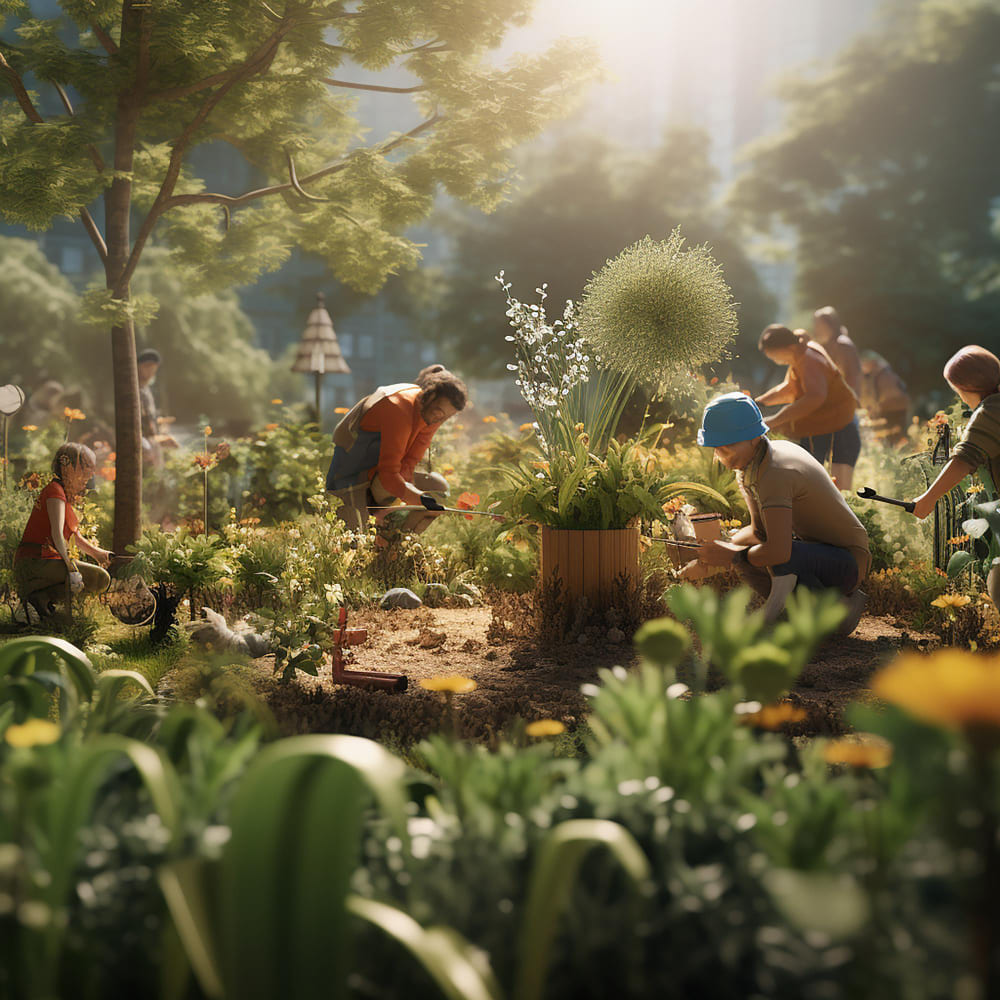
Community gardens are another powerful application of permaculture in cities. They provide a space for residents to grow their own food, learn new skills, and build relationships with their neighbors. A permaculture garden in a community setting can become a hub of social activity and ecological education.
These urban permaculture projects demonstrate that you don't need a large plot of land to make a difference. By applying permaculture principles to these spaces, city dwellers can increase their food security, enhance local biodiversity, and create more beautiful and resilient neighborhoods.
Social and Environmental Benefits in Cities
The benefits of applying permaculture principles in cities extend far beyond just growing food. These projects have significant social and environmental impacts, contributing to community resilience and environmental sustainability. They help to reconnect urban populations with nature and their food source.
On a social level, urban permaculture fosters community connection, provides educational opportunities, and can improve mental and physical health. Environmentally, it helps to reduce the urban heat island effect, manage stormwater, and increase biodiversity. These initiatives directly support broader sustainable development goals.
The positive impacts include:
-
Increased Food Security: Providing access to fresh, local food.
-
Community Building: Creating shared spaces that foster social interaction.
-
Ecological Regeneration: Greening the city and creating habitats for wildlife.
By bringing permaculture into the urban fabric, we can create cities that are not only more sustainable but also more livable and just.
Conclusion
In conclusion, permaculture offers a transformative approach to agriculture by prioritizing sustainability and harmony with nature. By understanding the core ethics and principles of permaculture, you can cultivate a thriving ecosystem that benefits both the environment and your community. Whether you're a seasoned farmer or just starting out, incorporating permaculture practices can lead to healthier crops, improved soil quality, and a more resilient agricultural system. Embracing these methods not only promotes biodiversity but also fosters a sense of connection to the land. If you're ready to take the next step in your agricultural journey, consider exploring how permaculture can enhance your farming practices---your crops, community, and conscience will thank you! For personalized guidance, don't hesitate to reach out and book a free consultation with our experts.
Frequently Asked Questions
Is permaculture suitable for beginners in agriculture?
Absolutely! Permaculture is suitable for beginners because its principles can be applied at any scale. Starting small with organic gardening techniques is a great way to learn. The focus on "protracted and thoughtful observation" over "thoughtless labor" encourages a learning mindset. A permaculture design course can provide a structured path for beginners.
Are there disadvantages to using permaculture?
The main challenges of the permaculture movement are the initial learning curve and the time required for systems to mature. It can also be labor-intensive at the start. However, these are often outweighed by long-term benefits like reduced costs, greater resilience, and better use of local resources in harmony with natural surroundings.
How does permaculture support sustainable agriculture?
Permaculture supports sustainable agriculture by prioritizing Earth care and sustainable land use. Its principles focus on building soil health, conserving water, and increasing biodiversity. This approach creates resilient, self-sustaining systems of permanent agriculture that can help mitigate the effects of climate change and ensure long-term food security.