
Title_1
Introduction
Welcome to the world of the Malva plant! The Malva plant is one of the pretty flowering plants in the mallow family. It stands out because it has soft flowers and can grow strong in many places. You do not have to be a skilled gardener to grow them. In fact, people with all kinds of skills can add these to their gardens. Mallows look nice, are useful, and also easy to care for.
When you have mallow family plants, you get beauty in your garden and you can even use them in your kitchen. People like them for how well they fit in different ways of life. Let's look at what you need to grow, care for, and enjoy these malva plants.
Overview of the Malva Plant

The group called Malva has many types of plants. They are part of the malvaceae family. You can find these plants in different places around the world. The plants can live for one year, two years, or many years. They grow in warm and mild areas in Africa, Asia, and Europe. A well-known type is malva sylvestris. It grows upright and has bright flowers.
One thing you will notice about these plants is their Malva leaves, which grow in turns and have a palm-shaped look. You can also spot these plants because of their unique flowers. It's easy to see and know them in many places. Let's talk more about their special features and why they were important in the past.
Botanical Description and Appearance
It is easy to spot a Malva plant when you know what signs to watch for. The plant often grows upright. Its stems can be simple or have branches. The Malva plant may reach a height from 10 to 200 cm, based on the type. A main feature is the mallow leaves. These leaves grow one after another. They are usually round or oval, and you can see clear lobes on them.
The malva flowers are easy to spot. You will see these blooms grow from the leaf axils. They can come out one by one or in small groups. Each flower has five wide, triangle-shaped petals. This look is common for plants in this group.
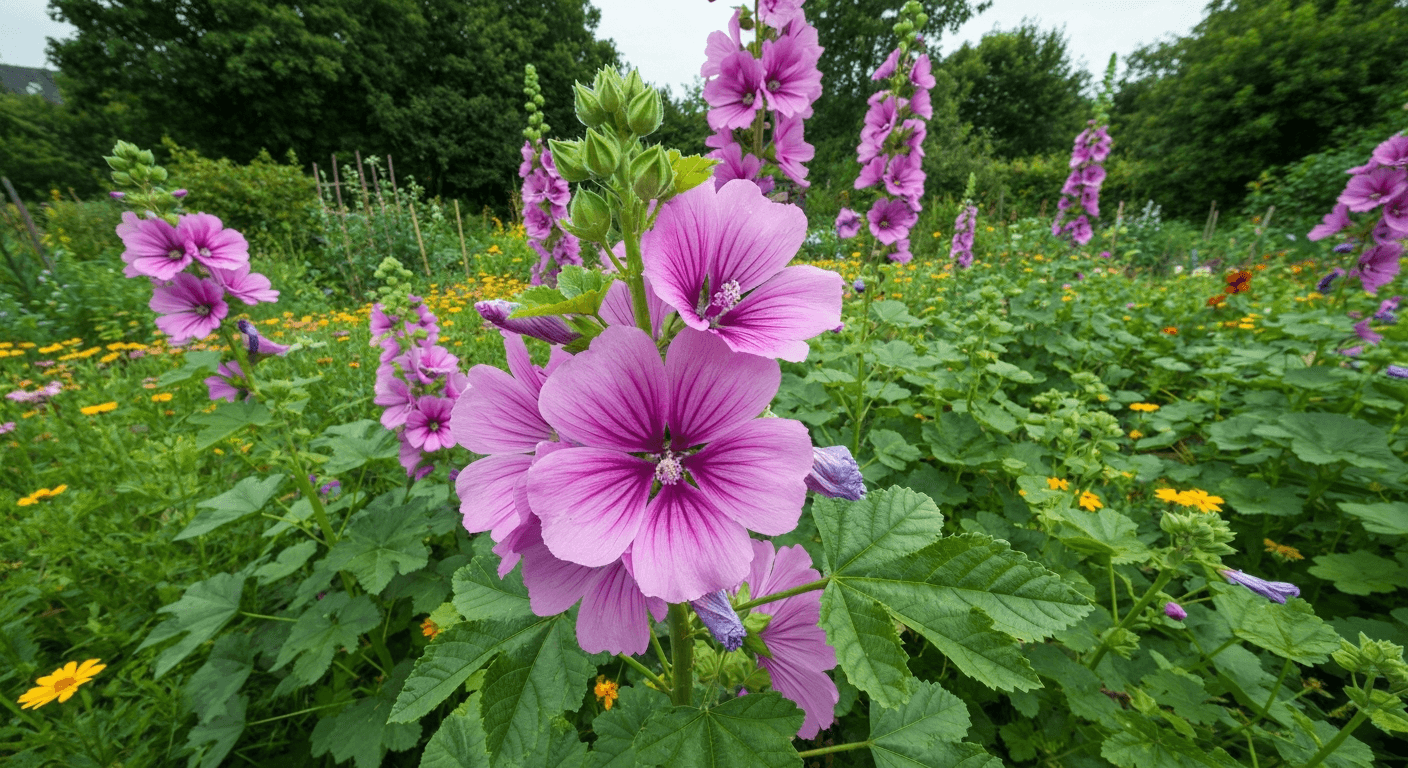
You can see a lovely range of flower color in the malva plant. The blooms come in pure white, soft pink, deep lilac, and rich purple. Some also get dark lines close to the middle of the flower. These lines make the flowers look even better. The special leaf shape and pretty flowers help you pick out the malva plant.
Distinguishing Features from Similar Plants
The mallow is a member of the malvaceae family. This means the plant has some things in common with hibiscus and hollyhock. But, the mallow also has things that make it different from them. One thing you may notice is the leaves. A lot of the time, they have shallow lobes. The leaves also have a palmate shape, which helps people spot and name the plant.
One easy way to spot the mallow plant is by looking at its fruit. After it gets pollinated, the plant grows disc-shaped seed pods. The seed pods have several parts set in a circle. That is why many people call it a "miniature cheese wheel" or "cheeseweed." When these seed pods are fully grown, they break open and release seeds.
Looking for these "cheese wheel" seed pods is a good way to tell if you have found a plant from the mallow family. The seed pods, along with the five-petaled flowers and lobed leaves, make it easy for people to know mallows from other plants in your garden or even out in the wild.
Historical Background and Etymology

The story of the mallow plant goes back a long time. In the third century BC, there was a doctor named Diphilus of Siphnus. He wrote that the juice of this plant helps keep the windpipe smooth. A Roman poet, Horace, also talked about mallows as part of his easy and healthy food source. This shows that people have used mallow as a food source for many years.
The word "mallow" has a long history. It comes from the Old English word "mealwe." Before that, it was the Latin word "malva." It is also close to the Ancient Greek name for the plant, which is "malakhē." This shows how people across the Mediterranean have known and used this plant for a long time. The color mauve, named in 1859, also comes from the French word for this plant.
Over the years, plants in the family Malvaceae got several common names. One example is cheeseweed, which comes from the shape of their seed pods. People once thought that putting mallows on graves could help feed the dead. This shows how important they were in culture.
Main Species and Popular Varieties of Malva
The Malva genus has about 150 species. You can find many beautiful Malva varieties that do well in gardens. Each kind has something special to offer. Some are tall plants that come back every year, while others are smaller and grow just for one season. There is a mallow for every spot in your garden.
One of the best known mallow species is malva sylvestris. People also call it the common mallow or high mallow. There are many types, but some are more popular in North America. These have their own look that people notice. Let's talk about these common and special kinds.
Common Malva Species in the United States
The Malva genus is found in many places. A lot of the Malva species that grow in North America came from other parts of the world. Only a small number of these plants are native to California and Baja California. Many kinds have started to grow wild and you can now see them often in gardens and wild spots.
The common mallow (Malva neglecta) is often seen in many places. It grows low to the ground and has small, light-colored flowers. You can find this plant in lots of lawns and gardens. Some other mallow species are also now a normal part of the American landscape.
Here are some types of Malva that you may see:
Common Name Scientific Name Key Features Common Mallow Malva neglecta Low-growing, round leaves, pale lilac flowers. French Mallow Malva nicaeensis Taller growth, larger flowers, often found in disturbed areas. Least Mallow Malva parviflora Small flowers, distinctive "cheeseweed" fruit. Chinese Mallow Malva verticillata Grown for its edible leaves, especially in Asian cuisine.
Unique Characteristics of Malva sylvestris
Malva sylvestris is a well-known plant. When people think of mallow, they often picture this one. Many call it the common mallow. People also use the name high mallow to talk about it. The reason is that its growth habit is taller and stands up more than its cousin, Malva neglecta, which is also called dwarf mallow.
This plant is known for its eye-catching purple flowers. The flowers are bigger and show more color than most other mallows. The petals have dark lines that spread out from the middle and make a nice striped look. This bold color makes it a top choice for people who want to plant it in their gardens.
The leaves of Malva sylvestris are another important part of this plant. They have the usual mallow look, with five to seven shallow lobes. These shallow lobes make the leaves look a bit jagged and shaped like a hand. The plant stands out with its tall size, deep-colored flowers, and these special leaves. That is why high mallow gets noticed.
Notable Decorative and Wild Varieties
Besides the common mallow, there are some other kinds that add beauty to gardens. One such type is malva moschata, often called musk-mallow. It has soft, frilly petals. You may also notice a light, musky smell from it, especially when the day is warm.
Another type people like is the tree mallow (Malva arborea). This woody plant lives for years and can grow big, like a small tree or bush. It is a good choice for gardens near the sea. On the other hand, there is the dwarf mallow (Malva neglecta). This plant grows low to the ground. People find it in many places, and it is often called a weed. Still, the dwarf mallow has its own quiet charm.
Some other well-known types that look nice or grow in the wild are:
-
Greater Musk-Mallow (Malva alcea): This plant has big, bright pink flowers. The leaves are cut deep and stand out.
-
Island Mallow (Malva assurgentiflora): This one grows in California. It has pink flowers that look like hibiscus.
-
Vervain Mallow (Malva alcea): This type can get tall. It gives you pretty pink flowers that look a lot like the greater musk-mallow.
These plants all have pink flowers and malva alcea is one you will see often.
Flower Structure and Blooming Habits
Mallows are loved flowering plants because they have many showy flowers. Their flower structure stays the same for every type in this group. Each bloom has five petals that stand alone. The tips of these petals have a notch. Together, they make a cup or sometimes a funnel shape. This look is simple, yet has some charm. It helps the plants to get pollinators easily.
To get the best blooms, mallows need a lot of sunlight and soil that drains well. Their flowers last for a long time, so they are good for any garden. Now, let's talk about the colors, markings, and growing seasons of these beautiful flowers.
Flower Colors and Markings
The mallow family is known for its wide range of flower color. You can see flowers in many shades of pink, lilac, and purple. There are also some that are pure white. This gives you the chance to mix flower color and make your garden beds look nice. The mallow family helps you bring new looks to your garden.
Many malva flowers do not have only one solid color. A lot of the time, you will see that the petals have darker lines or stripes. These lines are usually a darker purple or pink. The stripes start at the middle of the flower and move out, which gives the flower more depth and makes it stand out. For example, many kinds of pink flowers show deep magenta stripes.
This change in color and look is a big part of what makes them special. Some colors and patterns you often see are:
-
Classic Purple Flowers: You will often see these in malva sylvestris. They have dark lines you can see on the petals.
-
Soft Pink: Malva moschata shows off light pink flowers. The blooms look soft and pretty.
-
Pure White: Some types have pure white flowers. This gives a clean feel to your place.
Flowering Season and Duration
One thing I like about growing mallows is how long they bloom. The flowering season is long. These strong plants give color for months. They usually start in late spring or early summer and will bloom into the fall. Some types can have flowers from May until October.
Mallows keep making new flowers for a long time during the growing season. That means they can add color to your garden when other plants stop blooming after just a few weeks. Mallows help your garden stay bright and full. The time they bloom can change a little. It depends on the type of mallow you grow and the weather where you live.
Because mallows bloom for a long time, they give important help to bees and other pollinators. This is true, especially later in the season when it can be hard to find other nectar. Their long flowering time is a big reason why many gardeners like mallows. The flowers keep adding color and life to your garden, and they do that again and again.
Attracting Pollinators and Garden Benefits
Planting mallow in your garden bed is a good way to help local wildlife. The flowers look nice and attract many bee species, like bumblebees. They have an open shape, so bees can get nectar and accessible pollen easily. This makes mallow a great food source for these pollinators.
Besides bees, the mallows in your garden will bring in other beneficial insects. When there is more insect activity, it helps with pollination for your fruits and vegetables. By adding mallows, you make your backyard a better and healthier place for all kinds of plants and helpful bugs.
The good things about having mallow plants for bees and other pollinators are:
-
Giving bees and other pollinators a steady food source from the spring to the fall.
-
Bringing many kinds of bees and other insects that help with pollination.
-
Helping the same beneficial insects that can keep some pests out of your garden.
-
Making sure there is more life and variety in your garden.
Growing Malva in Your Garden
Adding the Malva plant to your* garden design* is a good way to bring color and a nice feel to your space. This plant is easy to care for and does well with simple care. Because of this, it's a good pick for both new and experienced gardeners. The Malva plant is also a food source for both people and for bees and other pollinators.
The best method for growing mallow will depend on where you live and the type of soil you have. But there are some things that work well for everyone. Make sure you prepare the soil right and water it the way it needs. If you follow these tips, your mallows will grow well.
Ideal Soil Types and Preparation
Mallows do not need a lot of special care, but the plants will grow better in some types of soil. The ideal soil types for growing them are well-drained and have a lot of nutrients. Mallows like soil that is not too heavy or packed down, since they do not do well with too much water staying around their roots. If you have clay soil in your garden, you can add compost to make the water drain better.
Good soil preparation is important before you plant. Begin by taking out all weeds and big stones from your garden bed. Make the soil feel fine and crumbly. This step will help the roots of the malva plant grow well and fast.
For potted mallows, the best thing is to use a good potting mix. Make sure the mix is full of the nutrients the malva plant needs and drains well. You can also put some crushed expanded clay or gravel at the bottom of the pot. This keeps too much water from sitting near the roots, so your malva plant will be healthy and look good.
Sunlight and Watering Needs
To help your mallow plants bloom the most, the best thing to do is give them plenty of light. They grow well in a spot where they get full sun. This means the plants need at least six hours of direct sunlight each day. If you give them this, you will see strong growth and lots of flowers.
Many types of mallow do best in full sun. But most can also grow in partial shade. In places with less sun, you may see fewer flowers on the plant. If you notice the leaves of your mallow turning yellow, it may mean the plant needs more water. This is common when the weather is hot and dry.
Watering is most important when seeds start to grow and right after you move young plants. Here are a few key points:
-
Give young plants steady moisture. This will help them get settled in the ground.
-
During long dry times, give water to plants that are already growing well.
-
Do not give too much water, as mallows do not like wet soil.
Fertilization and Mulching Tips
Perennial mallows need more nutrients to grow well and bloom for a long time. You should use a balanced fertilizer in the spring. This will help give the plants what they need for the growing season. A slow-release granular fertilizer is good because it gives out nutrients slowly over several weeks.
Mulching is also very helpful. When you add a layer of organic mulch around the base of your plants, it can hold in the soil moisture, stop weeds from growing, and keep the soil cool. This is one of the best additional tips if you want to take care of mallow with less work.
When you use a granular fertilizer, mix it gently into the top bit of soil around the plant and water it in. If you grow annual mallows, the food in a good potting mix or compost is often enough. Still, giving a light feeding when they grow the most can help them.
Planting and Propagation Techniques
Getting more mallow plants in your garden can be easy. There are simple plant propagation ways you can use. The best method for many is to sow seeds right where you want the plants to grow. Many mallows like to start this way. They do not do well if you move them after planting.
You can also grow mallows with vegetative propagation. This means you can divide the plant, and this works well for kinds that come back every year. In this text, we will talk about how to plant mallow seeds, move small plants, and use other ways to make more mallows. These tips can help you add more mallows to your garden.
Sowing Malva Seeds Successfully
The ideal time to sow seeds for most malva species is in the spring. The best months are usually March, April, and May. You can sow many mallows outside in early spring when the last hard frost is gone. Most people like to use this way because some types of malva species do not grow well if you move them after you sow the seeds.
Before you sow the seeds, clear all weeds from the soil. Rake the ground until it has a fine feel. After that, cover the seeds with 0.5 to 1 cm of soil. Make sure to keep the soil moist all the time until you see new plants. This can take one to two weeks if the soil is warmer than 15°C (59°F).
Here are a few tips for successful sowing:
-
Sow seeds right where you want them to grow. This helps stop shock from moving the plants.
-
If you need to cover a bigger spot like a bee pasture, scatter the seeds across the top. After that, use a rake to gently work them in.
-
Make sure the soil stays damp when the seeds are sprouting. Don't let it dry out during this time.
Tips for Transplanting Seedlings
While the best way is to sow seeds right in the ground, there are times when you have to move your malva plant. This is true if you started your seedlings inside or bought them from a store. When you transplant, make sure to handle the young malva plant carefully. This helps reduce stress on its roots.
Plant your seedlings in the spring. Wait until the last frost is over. When you move them to the garden bed, make a hole that is big enough for all the roots. Gently set the seedling in the hole. Make sure the top of the roots is even with the dirt around it. Fill the hole with soil. Press the dirt down a little and water it well.
Make sure you give each malva plant enough room to grow. For annuals, the space between plants should be about 20 to 30 cm. Bigger perennial types need more space, so leave 50 to 70 cm between them. This will help your malva plant grow well.
Methods for Vegetative Propagation
When you want to make new perennial mallows, you can use vegetative propagation. This is a good way to get plants that are the same as the parent. Division is the method people use most. It works well and is easy to do. This process also gives you more plants and helps older or crowded clumps feel fresh again.
The best method for dividing the Malva plant is to do it in the spring or fall. Start by digging up all of the Malva plant. Use a sharp spade or knife to cut the root ball into smaller pieces. Make sure each piece has both roots and shoots. Plant these new parts in a good spot and give them plenty of water.
It is possible to grow a malva plant from cuttings. But, this does not work well for most people. It also takes more time compared to growing malva plant by splitting the roots or starting from seed. For many people who take care of their gardens at home, dividing the malva plant is still the best and simplest way to make more of these flowers.
Ongoing Care and Maintenance
One thing that is good about the malva plant is that it needs very little care. But if you keep taking care of it during the growing season, the plant will stay healthy and full of life. A few simple jobs like watering and giving the plant some fertilizer can help a lot.
Other key practices are to cut back your plant to help it make more flowers and to keep it from growing too wild. The right care also helps stop many problems with bugs and sickness in the plant. Let's talk about the basic upkeep tasks you need to know.
Pruning and Deadheading Practices
Pruning is a good way to keep perennial mallows healthy. If you give them a trim right after the first bloom, it can help the plant make more flowers. This can make the plant last longer, even if it does not live many years. Pruning also stops the plant from spreading too much by dropping seeds, so you can keep it under control.
Deadheading means taking off flowers that have faded. It is good for all types of mallow. When you cut old blooms from the Malva plant, you help it use its energy to make more flowers and not seeds. This job is easy to do. It helps your plant bloom longer and gives you optimal flowering.
For perennial species, cut back the leaves to the ground in late autumn after they die. This helps keep the garden clean and gets the malva plant ready for winter. For annuals, take out the whole plant from the bed after it is done growing for the year.
Managing Weeds and Competing Plants
To help your mallows grow, you need to keep the garden bed free from weeds. The weeds will take water, nutrients, and sunlight away from your mallows. This can stop them from growing well. So, you should pull out weeds often, especially when your plants are new. This will help your mallows do better in the garden bed.
Putting mulch around your plants is a good way to keep competing plants from growing. The mulch stops sunlight from getting to weed seeds and helps the soil keep water. This is good for your malva species.
Here are a few tips for managing weeds:
-
Weed the garden bed before you plant mallows.
-
Put a 2-3 inch layer of organic mulch around the plants.
-
Pull any weeds you see right away so they do not grow strong.
Overwintering Strategies for Perennials
It is easy to keep most perennial mallow plants through the winter. They are known to be very tough. A lot of these plants can handle cold down to -25°C (-13°F). The plant is an herbaceous perennial. When fall comes, the part of the plant you see above the ground will die off by itself. The dead parts stay and help protect the roots by keeping them warm.
For mallows that you plant in the ground, you do not need any special protection. But plants that are in pots are at more risk. Their roots feel the cold air more. To keep potted mallows safe, move the pot to a place that is out of the wind, like next to a house wall. You can also wrap the pot with jute or fleece. This can help block out the cold and keep the plant warm.
During winter, look at your potted plants from time to time. In affected areas where winters are dry, you should give them a little water on days when there is no frost. This will help stop the roots from drying out all the way. For the rest of the time, they do not need much care until spring comes.
Pests, Diseases, and Troubleshooting
While mallows are strong plants, they can still get problems now and then. Sometimes, pests like spider mites and some fungal diseases can show up. The best thing you can do is stop disease before it gets bad. A healthy plant is less likely to get these issues. When you give the plant good growing conditions, you help protect it right from the start.
If you see any problems, finding them early and treating them fast can stop them from spreading. In this text, we will talk about how to spot common pests, keep away diseases, and see when your mallow plants are stressed. We will focus on the affected areas.
Common Malva Pests and Their Control
Mallows are usually not bothered by pests, but sometimes you may see some common ones. Aphids and spider mites can both show up. Aphids often gather on new leaves or under the older leaves. Spider mites make fine webbing on the plant. They also can make the leaves look spotty and faded.
These pests do not usually harm a healthy Malva plant in a big way. Often, beneficial insects like ladybugs will help control them in your garden. If you get a lot of pests, there are several ways you can control them.
Here are some control strategies:
-
A strong spray of water: You can use a strong spray from your hose to knock spider mites and aphids off your plant.
-
Insecticidal soap: This is a good choice if you see a lot of these bugs. It is safe for your plants.
-
Encourage beneficial insects: You can plant flowers that bring helpful bugs like ladybugs and lacewings. These insects eat spider mites and other pests.
-
Regularly inspect plants: Check your plants often. If you see spider mites or other bugs early, it is much easier to get rid of them.
Disease Prevention and Treatment
The most common thing to harm mallows is mallow rust. This is a kind of fungal diseases. It makes orange-brown spots on the leaves and stems. The best way to handle rust and other fungal diseases is to stop them before they start. Plants that are healthy and not under stress will not get affected as much.
To keep your malva plant healthy, give it enough space so the air can move around. Do not water the plant from above, as this keeps the leaves wet. Wet leaves can help fungus to grow. When the plant goes through long dry or rainy times, it can get weak. A weak malva plant can get sick faster.
If you see signs of mallow rust, here is what you can do:
-
Take off and throw away all the plant parts that show signs of the problem right away. Do not put them in a compost pile, because the fungus can spread if you do this.
-
Make the air move better around the plant by cutting back thick or crowded parts if you need to.
-
Be sure the plant is put in the right spot. The soil should let water go through it well, and the plant should get enough sun.
Signs of Stress and Recovery Techniques
Learning to see the signs of stress in your malva plant can help you fix problems fast. One sign is yellow leaves. This can mean your plant needs water, more sun, or that it is getting too much water. Wilting is also easy to spot. If the malva plant is wilted, it often needs water.
Once you find out what is causing the stress, you can start with easy recovery techniques. If the soil is dry, give the plant lots of water at once. If you see yellow leaves and the plant is in shade, try to move it to an area that gets more sun. If the plant has too much water, help it drain better or water it less often.
If you see signs of disease on the affected areas, like the leaves or stems, take them off right away. This can stop it from spreading more. When you watch your plants and care for their needs, you help your malva plant get better fast. This will help it become healthy and strong again.
Uses and Applications of Malva
The malva plant is not just nice to look at in the garden. It also has a long history of being useful to people. Many types of the malva plant are a good food source. You can eat the leaves, the flowers, and sometimes the seed pods. They taste good and you can put them into many kinds of dishes.
Mallow has been used in herbal medicine for a long time. People value it for how it can help calm the body. Because of this, there are many ways people use it to feel better, especially for problems with the lungs and the stomach. Let's see how you can use this helpful plant in your food and for your health.
Culinary Uses and Popular Recipes
Yes, mallow is a great plant you can eat. There are many ways to use it in your food. People, pets, and animals can all eat every part of this plant, and it is safe for them. The young and soft malva leaves taste mild. You can use them instead of lettuce in your salads, or cook them like you do with spinach.
The edible leaves and flowers are not the only parts you can use. The flowers add color when you put them in salads. You can also eat the seed pods called "cheesewheels" while they are still green and young. They taste crunchy and can be eaten raw or put into other dishes. You can roast and salt the ripe seeds, too.
Here are a few popular recipes and ideas:
-
Mallow Leaf Salad: Toss young malva leaves with your favorite vinaigrette.
-
Stuffed Mallow Leaves: Take large leaves and use them to wrap rice or bulgur, like you do with grape leaves.
-
Cooked Greens: Sauté or boil older mallow leaves and serve as a side dish.
Herbal and Medicinal Applications
Mallow is well known in herbal medicine. The plant is full of mucilage, which is a sticky part that can feel smooth. This part is good for many medicinal uses. People have used it to help with irritation in the body's mucous membranes for a long time.
One of the ways people use malva leaves the most is to help with coughs and sore throats. A tea or drink made with malva leaves and flowers can coat the windpipe and calm down the irritation. It is used a lot in things that people take for colds, coughs, and to feel better when there is a problem in breathing.
Mallow is good for more than just your throat. The way it calms things can also help with problems in your stomach. A cup of mallow tea can make your stomach feel better if it is upset or if you feel swelling in your gut. If you chew on the fresh leaves, you can feel relief from a cough or a sore throat, too.
Decorative and Landscape Applications
The beauty of Malva stands out in many landscape uses. It has a long blooming time and pretty flowers. This makes mallow a good pick for many decorative uses. You can use it to bring height and color to borders. It can fill empty spots in cottage gardens. It can also give a fresh and low-care meadow feel to your yard.
Whether you want to plan a formal garden design or go for a more natural look, mallows can add beauty to your space. Let's talk about how you can add these useful plants to your garden and use their flowers in different ways.
Incorporating Malva into Garden Designs
It is easy to add mallows into your garden design. You will feel happy with the results. Mallows grow in an upright way. This growth habit is good for the middle or back part of your garden border. The tall flower spikes of mallows can go over the top of shorter plants. They look good with other plants like feverfew, mullein, and scabiosa in your cottage-style garden.
Different kinds of malva species can be used for different looks in the garden. If you want height, use malva sylvestris because it grows tall and stands out. If you need something low, try malva neglecta as it spreads out and makes a nice groundcover. Their beautiful flowers make any space feel soft and a little romantic.
Here are a few garden design ideas:
-
Cottage Gardens: You can mix mallows with many types of perennials and annuals. This gives your garden a classic and relaxed look.
-
Pollinator Gardens: Plant them in groups. This helps bees and butterflies come and get lots of nectar.
-
Meadow Plantings: Sow seeds over a wide area. This will make a pretty, more natural space full of flowers.
Using Malva in Fresh and Dried Floral Arrangements
Malva flowers look very soft and pretty. They are nice to have in both fresh and dried flower displays. These showy flowers bring a wild and gentle feel to any group of flowers. When you want to use fresh arrangements, you should cut the stems in the morning after the flowers have filled up with water.
When you cut them, pick the stems that have both open flowers and some buds. This can help your arrangement last longer. Put them in water right away. This will stop the flowers from wilting. Their soft colors---like pink and purple---look good with many other garden flowers.
Mallows are good to use in dried floral arrangements. You can press the flowers to help keep their color and shape. Or, you can hang the stems upside down in a dark place with some air so they dry well. Dried mallow flowers are used a lot in tea blends. They also bring nice color to wreaths and other craft projects.
Malva Tea Preparation and Uses
Malva tea is a popular drink that many people use to get the health benefits of the plant. This tea is made from the flowers and malva leaves. It is known for being soothing, especially for sore throats and when you have a cough. It is easy to make, and you can use malva leaves or flowers that are fresh or dried.
Making the tea is simple. First, you have to pick the leaves and flowers the right way. Then, dry them well. Let's look at the steps on how to pick, dry, and make your own Malva tea. This way, you get all the good things in your cup.
Harvesting and Drying Malva Leaves
The first thing you need to do to make mallow tea is harvest the plant. You can gather mallow leaves and flowers at any time during the growing season. For the best taste, it is good to pick the leaves and flowers in the morning. Wait until the dew is gone, but do not wait too long so the sun does not get too hot.
For drying, spread the malva leaves and flowers in a single layer. You can use a screen or a clean cloth for this. Put them in a warm place that is dark and has good air moving through it. Keep them out of direct sunlight because it can make the colors fade and take away some good things in the leaves. The malva leaves and flowers are dry when they feel crisp.
When the mallow is fully dry, put it in an airtight container. Keep this container away from light and heat. If you store it well, dried mallow can stay good and strong for many months.
-
Harvesting Time: You can gather during the growing season.
-
Parts to Use: The flowers and the leaves are good to use.
-
Drying Method: Let them air-dry in a dark place that has fresh air.
Steps to Prepare Malva Tea
Making Malva tea is easy. You can make it with fresh or dried mallow leaves and flowers. Dried mallow leaves and flowers are stronger, so you should use less of them. A cold water extract is a good way to make Malva tea because it helps keep the mucilage in the tea.
To make a cold infusion, add a tablespoon of dried mallow or a small handful of fresh mallow to a jar. Pour in one cup of cold water. Let this sit for a few hours or you can leave it overnight. The water will feel a little slick after that. You can strain the drink and you may warm it up gently if you want to have it warm.
For a quicker hot infusion:
-
Put 1 or 2 teaspoons of dried mallow leaves and flowers in a cup.
-
Pour hot water (make sure it is not boiling) over the herbs.
-
Let it sit for 5 to 10 minutes. Then, strain it and drink. You can also add honey if you want it sweeter.
Potential Health Benefits of Malva Tea
Malva tea is best known for helping with sore throats and dry coughs. Many people use it for this reason. The leaves and flowers in the tea have a lot of mucilage. This makes a smooth layer over sore areas in your throat and your breathing passages. It can help give you light relief.
This soothing effect also helps the stomach and intestines. If you drink Malva tea, it may calm swelling in your stomach or gut. This can be good if you have things like gastritis or feel sick to your stomach. People have used this gentle remedy for a long time in simple home medicine.
Mallow tea is usually safe to drink. Still, it is best to check with your doctor before you try any herbal remedy. This is important if you are pregnant, nursing, or if you have any health problems. Mallow tea is gentle, so it can be a good choice when you have a cold or the flu.
Conclusion
To sum up, the malva plant is a great choice for any garden. It looks nice, and it has uses in food and as a helpful herb. You now know about its parts, the different types, and how to grow it well. You can put the malva plant in your garden or make a calming cup of malva tea from it. There are many things you can do with this plant. When you care for the malva plant, you need to pay attention, but it is worth it because of all the benefits. If you want help to begin growing malva, you can ask for a free consultation and get tips for your garden.