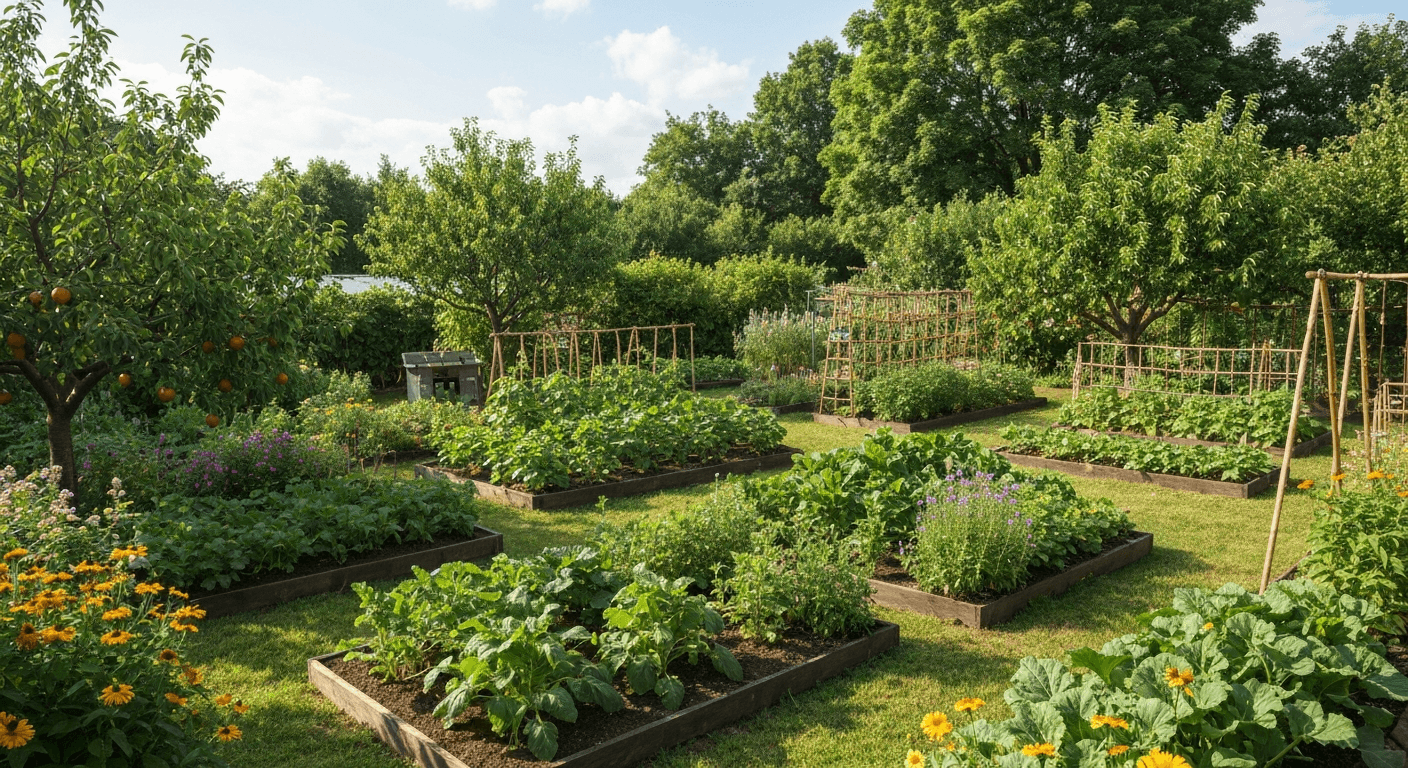

How to Design a Thriving Permaculture Garden from Scratch
Introduction
Have you ever thought about having a garden that can look after itself? Permaculture gardens can help you get there. This is not just planting a few vegetables. It's a different way to think about food production and how you connect with the land. Permaculture uses a holistic approach that lets you make a strong, lively, and useful space. It works with nature, not against it. This can be your first step to more sustainable living, and you can do it in your own backyard.
Understanding the Basics of Permaculture Gardening

Permaculture is not just a few gardening tips, it is a new way to look at design. Bill Mollison and David Holmgren came up with this idea. It is about making things that are as strong and mixed as natural ecosystems. This way of thinking can change how you see every part of your garden, from the dirt you walk on to the plants you grow.
Unlike a regular vegetable garden where things are usually planted in straight rows and you have to take care of it all the time, permaculture methods look to build a system that takes care of itself. The permaculture design process gets you to watch and learn from nature, then work with those patterns. Here, we will talk about what a permaculture garden is, the main ideas behind it, and how it is different from a standard garden.
What Is a Permaculture Garden?
A permaculture garden is a garden that works much like its own small, self-sustaining world. The name "permanent agriculture" shows that the goal is to make it last and be strong year after year. A permaculture garden is more than a spot to grow food. It is a place made with care for people and for the earth.
You do not fight against nature. You work with it. The goal is to make a place like natural ecosystems. In this space, plants, animals, soil, and water help each other. This kind of work leads to less waste. It saves resources. The area looks nice, stays alive, and grows well.
If you are new to this, it's best to start your permaculture garden by looking at your land. Take time to watch where the sun hits and how water moves in your space. Try to learn more about your local area as you go. Start with a small patch, like one garden bed. Then use what you learn and slowly bring in permaculture ideas over time.
Key Principles of Permaculture Design
The core of permaculture design follows some main ideas and ethics. These simple rules help you choose what will be good for a healthy and self-sufficient garden. There are three key ethics, and they make up the base of this holistic approach.
These ethics are:
-
Care of the Earth: Take care of the soil, forests, and water to keep them healthy.
-
Care of People: Make sure people get what they need to live well.
-
Setting Limits: Do not use too much and share extra resources with others.
These permaculture principles help you see your garden as a whole system. You do not just look at single plants. You think about how each one can help the others. For example, you can plant nitrogen-fixers next to heavy feeders. A garden with a variety of plants, especially hardy perennials, will give more support. This mix helps your garden stay strong and also means you work less each year.
How Permaculture Differs from Traditional Vegetable Gardens

The main thing that sets permaculture apart from traditional gardens is the core idea behind each one. In traditional gardens, people often use a step-by-step method. The point is to get as many crops as possible. This way can make people depend on things like fertilizers and bug sprays from outside the garden.
Permaculture design takes a bigger view and looks at the whole picture. It sees all the parts of the garden as linked together, like one big living system. The aim is to make something that keeps going on its own, works well, and can handle hard times with little work as time goes on. With permaculture design, people ask, "How can this part of the garden help in more than one way?" But, if you follow the old ways of gardening, the question is often just, "Where should I put this plant?"
This table highlights some key distinctions:
Feature Permaculture Garden Traditional Vegetable Garden Design Holistic, mimics natural patterns Linear, often in straight rows Goal Create a self-sustaining ecosystem Maximize yield and efficiency Labor More work upfront, less long-term Consistent, ongoing maintenance Diversity High (mixed cropping, perennials) Low (often monocultures) Inputs Aims for a closed-loop system Relies on external fertilizers/pesticides
Benefits of a Thriving Perma Garden
Having permaculture gardens gives you so many good things, and not just food. This kind of gardening is also called regenerative agriculture. It helps make the land better as time goes on. One great thing about it is that if you set it up the right way, there will be less work for you to do in the long run.
If you make a garden that can mostly take care of itself, you do not have to spend so much time pulling weeds, watering, or getting rid of bugs. This gives you more time to enjoy what grows in the garden and feel happy about your hard work. Now, let's see how these gardens help the environment, build self-sufficient homes for plants and animals, and make there be more kinds of living things in your area.
Sustainability and Environmental Impact
One of the biggest benefits of permaculture is that it helps the environment. When you use a sustainable approach, your garden supports the earth instead of going against it. This way, you do not need to use as much synthetic fertilizer or chemical pesticides. These things can hurt the soil and can also get into the water and make it unclean.
Permaculture also puts focus on saving water. It uses ways like catching rainwater and making swales. These ways help your garden to get stronger, even when there is not much water. You also get to use renewable resources. A garden made with these ideas can grow well with less water than other gardens.
These days, climate change is a big worry. That is why these practices matter even more. When you build healthy soil, you put carbon into the ground and take it out of the air. Permaculture gardens can deal with bad weather in a better way. This helps make your food safer and keeps your effect on the world smaller.
Creating Self-Sustaining Ecosystems
The main goal of permaculture is to make a garden that can almost take care of itself. How can this happen? The answer is by planning your garden so it works the same way as natural ecosystems. In a forest, leaves drop to the ground and break down. This adds food to the soil. Many kinds of plants and animals also help keep bugs away. Your permaculture garden can work like this too.
You can make the garden take care of itself by making the soil good for plants in a natural way. Use steps like composting, mulching, and planting cover crops that add nitrogen. When you do this, the soil becomes rich and full of life. You will not need to buy fertilizers from the store. This helps make a closed loop system. In this way, the waste from one part of the garden can help other parts grow better.
Cover crops and these simple steps help increase soil fertility in your garden.
While this way may take more work to get started, it is worth it in the long run. When your garden grows over time, it becomes more steady. You do not have to step in as much. The garden works on its own, so you can use your time for other things or just enjoy how much you get from it.
Enhanced Biodiversity in Your Garden
Permaculture gardens are full of life, and that is not an accident. A wide variety of plants grow together in these gardens. This high mix of plants helps gardens be strong and healthy. You will not see just one type of crop in a straight line. Instead, there is a variety of plants, and each one helps the other.
This mix is not just nice to look at. It is also very important for many reasons:
-
Attracting Pollinators: When you mix flowers with vegetables, the garden brings in bees and other beneficial insects. They help the plants grow and keep the garden healthy.
-
Natural Pest Control: A variety of plants can help confuse, repel, or keep away pests. This means you may not have to use sprays for pest control as much.
-
Improved Soil Health: Different plants use different parts of the soil with their roots and take up nutrients in many ways. This gives you healthy soil and helps soil health get better over time.
Even a small space can turn into a lively place full of life. A well-known example is a 64-square-meter permaculture garden. This garden has more than 30 fruit trees and 70 herbs. When you plant many different fruits, vegetables, herbs, and flowers, you help create a home for many living things. The garden works for everything from tiny microbes in the soil to birds sitting up in the fruit trees.
Essential Elements for Designing a Perma Garden
Designing a permaculture garden needs you to think and be creative. It is not just about putting plants wherever there is space. The overall garden design looks at how the parts of the garden work together. Permaculture designers think about these links to make things work well and to help the garden stay strong.
You do not have to be an expert to do this. You just need to observe things and make a plan. It is important to think about things like sun, wind, and water in your area. Here are the basic things you need to look at, from where you put things, how you prepare your soil, and how you handle water.
Choosing the Right Location and Layout
Choosing the right place for your garden is the first important step in the design process. A good layout will come from watching your land closely. You need to know the special things about your land before you start working on it.
When you set up your layout, there are some things you need to think about:
-
Sunlight: Where does the sun move over your land during the day and the year?
-
Water Flow: What is the way water flows on your property when it rains?
-
Wind Patterns: Are there spots that get a lot of wind or are protected from it?
Once you know this information, you can decide where to put garden beds and other things in your yard. For example, you can put plants that need more water in spots that get the most water from the rain. The idea is to make your layout work well with the land you have. This way, you save time and use fewer resources.
Soil Health and Preparation Techniques
Healthy soil is the base of a good permaculture garden. The soil is not just dirt. It is full of life and small things that help the plants grow. A permaculture garden looks at soil as a home for many living things. The aim is to make your soil health better each year, not worse.
One good way to get started is called "sheet mulching" or "lasagna gardening." Many people like this method, especially if they are new to gardening. In this method, you put layers of organic matter like cardboard, compost, and leaves right on top of the ground. This is a great choice because it keeps weeds from growing, makes soil structure better, and adds nutrients to the soil without any digging.
Other ways to help healthy soil are to use cover crops like clover or vetch. These plants cover open soil, stop it from washing away, and add organic matter. All of these steps put food into the soil for small life in the ground. Your plants get a soft, rich place to grow that also keeps water and stops the ground from getting packed tight. Making healthy soil is one of the best first steps you can take for your garden.
Water Management and Conservation Strategies
Effective water management is at the heart of permaculture design. The main idea is to slow down water, spread it across the land, and help it soak in. This helps make the most of every drop. It is better for the earth than using a hose for all your water needs.
When you watch the water flow on your land, you can find ways to catch and keep this important resource. It is good to have water where you need it. But, letting too much water stay in one spot can be bad. A good water flow helps stop wet and muddy spots. A balance of both water flow and holding water is key for your place.
Consider these strategies:
-
Rainwater Harvesting: You can collect water that falls on rooftops by storing it in barrels or tanks. This water can be used later when you need it.
-
Swales: Make shallow ditches along the shape of the land. These ditches hold extra water and let it soak into the ground. It helps keep the land wet.
-
Mulching: Put a thick layer of mulch on the soil. This keeps water from drying up fast. This way, you won't have to add as much water.
These ways help your garden keep growing even when there is not much rain.
What You Need to Get Started with Permaculture Gardening
Starting with permaculture may feel hard, but it is something all home gardeners can do. You do not need a big yard or costly tools. The best thing you can use is the way you watch and notice things around you. The design process starts when you look at your space and learn what makes it special.
By using some simple permaculture methods, you can start to change your yard. It can become a place that works well for nature and for you. You need to think about design more than how much work you do. In this text, you will learn about the basic tools, how you can pick the best plants, and ways to find the things you need for lasting results.
Basic Equipment and Tools
You may not know this, but you don't have to own a lot of costly tools to start permaculture gardening. The idea is to work in a smarter way, not in a harder one. A few basic tools will help you get started. After that, the goal is to have less maintenance on your garden.
A good digging fork and a strong shovel will help you with jobs like making garden beds or putting in trees. A wheelbarrow is great to have because you can use it to move compost and mulch around. For small or careful work, you will want hand tools. A trowel and pruning shears are both good for these kinds of jobs.
You want to not do much work each year. For example, you do not need to dig the garden again and again. Instead, you can make no-dig beds that get better as time goes by. The most important tools you have are your eyes and your mind. You use them to look at things and to plan a way of working that will later work by itself.
Selecting Seeds, Plants, and Companion Species
Choosing the right plants is key to a good permaculture garden. The idea is to make a group of plants that help each other grow well. This way of planting together is called companion planting. It is an important part of permaculture design.
Instead of growing just one thing, you can choose different types of plants. These plants can work well together and help each other grow.
-
Perennial Plants: These plants are very popular because they grow back every year. This means you do not have to plant them again each time. Good examples are fruit trees, berry bushes, and herbs like rosemary. These make your work easier.
-
Nitrogen-Fixers: Some plants, like beans and clover, are good for the soil. They take nitrogen from the air. Their root systems keep this nitrogen and help make the soil better for other plants.
-
Pest Repellents: Some herbs have strong smells. Marigolds and garlic are good at keeping bugs away from your vegetables. They help protect your garden.
Think about the whole plant and its root systems. Plants like comfrey have deep roots. They pull up nutrients from deep in the soil. This will help plants with shallower roots get those nutrients too. When you form these good relationships, you make your garden strong and productive.
Gathering Resources for Long-Term Success
To be successful with permaculture over the long run, you need to be smart with how you use your resources. The aim is to set up a system that keeps itself going, so you can make most of what you need right where you are. This way, your garden can be more strong and last for many years.
Start by getting things you can find around your yard and in your neighborhood. Do you see your neighbors putting their autumn leaves into bags? You can ask if you may take them to use as mulch. You can also use kitchen scraps and turn them into compost instead of tossing them out. These are good renewable resources that help boost soil fertility.
Thinking ahead is very important, especially with things like climate change. If you plant different types of crops, and pick some that can stand dry weather, your garden will do well even when the weather changes a lot. When you start to use things you once called waste, you help your garden stay strong and full for many years.
Step-by-Step Guide to Designing Your Permaculture Garden
Are you ready to build your own permaculture paradise? The permaculture garden design process is a path where you look, plan, and then do things. In the first year, you want to make a strong base for your system. This way, it will grow and get better as time goes on.
Don't feel like you have to do all the work at one time. This easy-to-follow, step-by-step guide will show you the important parts of the design process. It covers things like looking at your space and putting your plants in their new spot. Follow these steps and you can have a garden that looks good, gives you food or flowers, and is also good for the environment.
Step 1: Observe and Assess Your Space
The most important part of permaculture design is to watch your land with care and patience. Do not rush to plant right away. Take the time to see how the sun moves over your yard. Notice where the wind goes. When it rains, pay attention to how the water flow works. This step will help you know your land well and make better choices later.
Look at the different parts of the garden. Notice if there are shady spots or sunny places. See if some areas get water puddles. It's important to know about these small areas because the right plants and other features need the best spot to grow well. This time set for watching the garden can take a few weeks. Sometimes, it can even take a whole year to see all the changes through the seasons.
You should also take time to know your soil profile. Is the soil in your space sandy, clay, or loam? Dig a small hole to check the different layers in the soil and see if the soil has been packed too tight. This will give you good information to guide how you build the soil and will help you make a garden that works well in your own place.
Step 2: Plan Garden Zones and Microclimates
After you look at your site, you can start planning the next step in the design process. A big idea in permaculture is to set up your space as garden zones. You do this by putting things you use often close to you. This makes your overall garden design easier and better to use.
Zones are typically numbered from 0 to 5:
-
Zone 0: This is your home.
-
Zone 1: This is close to your home. You keep plants here that you use every day, like kitchen herbs and salad greens.
-
Zone 2-5: These zones are further from your house. Here, you can grow things like fruit trees, woodlots, and wild spaces that do not need as much care.
In these zones, you need to find and use small climates, too. A wall that faces south can be warm and is a good spot for plants that love heat. A cool, shady corner may be better for greens that grow best when the weather is not hot. When you use zones and small climates, you can put the right plant in the right place.
Step 3: Build Healthy Soil and Mulch Layers
When you have your plan ready, you can start making healthy soil. Keeping your soil health strong will help your garden do well for a long time. Try to make soil that is dark and crumbly. A good soil will be full of organic matter and will have a lot of life in it.
One good way to do this is to use sheet mulching. You put things like cardboard, compost, leaves, and wood chips on top of the ground. With this no-dig way, soil fertility gets better from the top down, much like how it works in a forest. The layers help stop weeds, keep water in, and break down with time to feed the soil.
A steady layer of mulch is very helpful for your soil. It can keep the soil safe from the sun and heavy rain. Mulch gives food to earthworms and the tiny things living in the soil. It also means you don't have to water as much.
When you keep adding organic matter, you help build a self-renewing system for soil fertility. This will make your soil better, year after year.
Step 4: Establish Water Harvesting Systems
Water is very important, and a smart permaculture design helps you use every drop well. Before you plant anything, think about how you will collect water. A good plan is to catch rain and move it to the places that need it most. This way, you do not need to use as much city water.
Watch how the natural water flow moves on your land. Then, you can make things like swales. Swales are level ditches that catch water when it runs off. They let water slowly move into the ground. This action helps your soil stay wet and can help trees and other plants grow downhill. You do not need extra watering for them. Good drainage is also important. It helps stop water from building up in one spot.
Setting up rain barrels to collect water from your roof is a simple and good idea. This gives you a supply of water, so you have some even when rain is low. If you start planning for water early, your garden can handle dry times better. It will not need as much water in the long run.
Step 5: Choose and Place Plants for Synergy
Now it is time to choose and place your plants. This is the fun part. In permaculture, you do this in a way that helps the plants work together. This idea is called companion planting. You want to put types of plants together, so they help each other in some way. The best way is to mix many plants, so they can all get something good by being with each other.
When you pick plants, think about what they can do. Each plant can have a different job or use in your place.
-
Food Producers: These include your main crops. You might have vegetables and fruit trees.
-
Fertilizers: Some plants, such as comfrey and legumes, help make the soil better with more nutrients.
-
Pest Repellents: Plants like strong-smelling herbs can keep away harmful bugs.
-
Ground Covers: Plants that grow low to the ground can cover the soil and keep weeds away.
Mix different types of plants in your garden. Do not plant just one type in big blocks. For example, you can plant garlic around your fruit trees. It helps to keep pests away. Use a lot of perennial plants so that you have less work each year. This variety of plants makes your garden stronger and more productive. It will also help your garden be better than a regular one.
Step 6: Incorporate Food Forests and Perennial Beds
A food forest is a top example of permaculture gardening. In this system, people create spaces that look like young woodlands. But the plants are picked because they are good for people, too. A food forest often has different layers. This helps it be full of life and give a lot of food.
These layers can have tall fruit trees, small dwarf trees, shrubs like berry bushes, herbs and vegetables, ground covers, and vining plants. This way of stacking plants in the overall garden design helps use the most vertical space and sunlight.
Adding a food forest or even putting in some simple long-lasting garden beds can be a smart way to have food for the long run. These may take a few years to get started, but in time they give you lots of food and do not need much care. This is a strong way to make sure there will always be food, and the system can keep going by itself.
Common Mistakes to Avoid When Creating a Perma Garden
While permaculture practices help you lower effort in the long run, there are some mistakes that can make much work for you over time. If you make early errors, it can take a long time to fix them. That's why it helps to know what to look out for right from the start.
Trying to do too much, too fast, or missing important planning steps can make you feel frustrated. The main thing is to make a system that helps you, not one that makes everything harder. Here are some common mistakes people make, so you can know what to watch out for in your own garden.
Overlooking Site Observation and Planning
Many people feel excited to start a new garden. They want to start planting right away. But one big mistake is to hurry and skip looking at the area first. It's important to watch and study your site before you do anything. In permaculture, they say you need "long and careful observation." This is not just an idea. It's one of the main things you have to do, because it will help you avoid problems later.
If you don't really know your site, you might put a plant that likes sun in a spot that doesn't get much light. You could end up building a garden bed where there is too much water, too. The first steps of the design process help you find the right place for everything. This saves you from moving these things later.
Take your time during the first year. Spend that year watching the sun, wind, and water on your land. This careful look at things early will help you have less work in the future. Being patient at the start is the key to making a good permaculture system that lasts a long time.
Neglecting Diversity and Plant Relationships
Planting just one type of crop together is a mistake people often make again. It may seem nice to see rows of only one vegetable, but this can bring in pests and disease fast. When there are not many types of plants, the garden will be weak. This will often mean you have to use more intensive gardening to fix the problems.
Forgetting about companion planting is not a good idea. Plants can help each other grow, or sometimes stop growth. There are many ways they work together. If you ignore these relationships, you miss out on the help that nature gives. It is better to use companion planting to get the most from your garden.
Try to mix flowers, herbs, vegetables, and fruits in your garden. When you have this kind of variety, it helps confuse pests. It also brings in beneficial insects and helps make the soil healthy. A garden that has many kinds of plants together is much stronger than one where every plant is kept by itself.
Ignoring Water Flow and Drainage
Water can be very good for a garden or can cause big problems. A mistake many people make is to not notice the way water flow happens and how water leaves the land. This can make plants very dry, or it can flood their roots with too much water. Both things are bad for the plants.
If you plant in a low area and do not improve how water moves, there can be too much water. This can make the ground like a swamp with no air, and this will kill most plants. If you put plants that need a lot of water on a dry and sunny slope with no plan for water, they will not grow well and can dry out. The key is not to set up your yard in a way that you have to use much water to fix a mistake.
Watch how your soil profile works and how it deals with water. You want to have a yard that keeps water well but does not stay too wet. A good plan for water management will help you avoid many problems. It will also help your plants get the water they need to grow well.
Sustainable Practices for a Thriving Permaculture Garden
To help your garden do well for many years, you need to add lasting habits to what you do every day in the garden. These permaculture ways help cut down on waste and use things again in new ways. This system grows stronger with time. If you do this, your garden can do well in the long run.
When you recycle nutrients, handle pests in a natural way, and work with living things, you make a system that can keep going on its own. Here are some main steps that can help you keep your permaculture garden healthy and growing, and you will not need a lot of things from outside your garden.
Composting and Organic Waste Recycling
In a permaculture garden, the goal is to not let anything go to waste. Composting is an important step. It takes food scraps from the kitchen and yard and turns them into "black gold" for the garden. This is the best way to recycle. It gives you a useful resource for your plants.
You can add all your uncooked vegetable scraps, coffee grounds, eggshells, and yard trimmings to a compost pile. Over time, small living things break down this material. It turns into a dark, rich mix that has many good things for plants. If you use this compost in your garden beds, it will help build strong soil fertility.
This easy action makes a big change to your soil health. The soil structure gets better, and the soil can hold more water. This is good for all the living things in the soil. If you keep putting your organic waste back into the soil, you make a system that keeps making your garden better each time.
Natural Pest Control Methods
One way a permaculture garden can take care of itself is by using natural pest control. Instead of using sprays with chemicals when there is a problem, the idea is to let the garden be balanced. This way, pests are kept in check and do not become too many.
The key is to bring in good insects like ladybugs, lacewings, and predatory wasps. These are natural enemies of many common garden pests. You can attract them by growing different flowers and herbs, like dill, fennel, and yarrow. These insects will be the security team for your garden.
Other strategies you can use are growing ground covers. These plants give a home to spiders and beetles that eat pests. Another way is to build up organic matter in your soil. This helps your plants be stronger and healthier. When your plants are healthy, they do not get attacked by pests as much. A healthy garden is the best way to keep pests away.
Integrating Animals and Beneficial Insects
Animals and beneficial insects are important in making natural ecosystems strong and healthy. In permaculture, people see them as helpful partners. They do many important jobs in the garden.
You can add them to your design even if you are working on a small scale.
-
Chickens: You can use chickens to help with garden beds. They eat bugs, turn the soil, and give you manure for your compost.
-
Ducks: Ducks are great at finding slugs and snails.
-
Bees: Bees help a lot with pollination. They help your fruits and vegetables grow more and be better.
Beyond caring for domesticated animals, you want to make your yard feel safe for wildlife, too. A small pond can bring in frogs and dragonflies. These animals help by eating pests. A brush pile can give a home for birds and certain bugs that hunt other pests. When you choose to welcome these animals, you give your garden extra strength and help it grow better.
Designing a Perma Garden for Small Spaces
You do not need a lot of land to practice permaculture. The main idea of permaculture works well in a small area. You can make the most of a tiny backyard, a small patio, or even just a balcony. With these spots, you will be able to set up good permaculture gardens.
The key is to look up and use all the space you have. When you use some intensive gardening methods, you can get a lot of food from a small area if you also follow permaculture ideas. Let's see how you can use vertical space, containers, and raised beds to get the most out of your harvest with intensive gardening.
Vertical Gardening Solutions
When you do not have much room on the ground, the best thing is to grow up instead of out. Vertical gardening is a great way to practice permaculture methods when growing in a small spot. With the help of walls, fences, and trellises, you can make your growing area much bigger.
You can make cucumbers, beans, and squash grow up a trellis instead of letting them spread out on the ground. You may want to use hanging baskets for things like strawberries or herbs, too. There are many ways you can set up living walls with lettuce, herbs, or other greens. Both do-it-yourself ideas and ones you can buy are ready to use.
This way of gardening helps you use all parts of the garden, not just the ground. You can also grow plants up, using walls or fences. By using space this way, you can grow a lot of food even if your space is small. It is a good way to make sure you get the most from what you have.
Container and Raised Bed Approaches
Containers and raised beds are great ways to practice small-space permaculture. They let you have full control of your healthy soil. This is good when the soil you have is not good, or if it is bad for plants. You can make healthy soil yourself right from the start.
Raised beds help you use intensive gardening. You can plant things closer together than you would if you put them in the ground. This lets you get a bigger harvest, even in a small space. It is easy to build raised beds in different shapes and sizes. You can make the bed fit your yard or garden just right.
Containers give you more options. You can use them to grow many kinds of vegetables, herbs, and even small fruit trees in pots. This means you can have a garden on your patio, balcony, or driveway. Make sure you pick big enough containers and use good potting mix. This will help your plants stay healthy and grow well.
Maximizing Yields in Limited Areas
Getting good yields from a small area is possible with smart planning and planting. If you plan well, you can keep your garden working all through the growing season. The good part is that you can do all this with less work than you think.
Here are a few tips for maximizing your yields:
-
Succession Planting: When you pick one crop, plant a new one right after in the same spot. This way, your garden beds will always grow something.
-
Intercropping: Put fast-growing crops like radishes in between slow-growing ones like broccoli. You will get the radishes before the broccoli gets big and needs more room.
-
Choose High-Yielding Varieties: Pick types of plants that are small but still give you a lot to harvest.
By using these methods, you can grow food at different times and in different spots in your garden. This lets you make the most of your space and get more food from it. You do not need a big yard to grow a lot. A small area can still be a good and busy permaculture garden.
Conclusion
To sum up, making a thriving permaculture garden from the very start is a great way to help the earth and practice sustainability. When you learn the main ideas and add key things like caring for soil health, managing water, and letting plants help each other, you can make a strong and healthy space that is good for you and nature. Keep in mind that you should enjoy the process, learn with time, and change what you do when you need to. Your garden should show what you want while also helping many kinds of life grow and making it able to take care of itself. Start now, and you will see your permaculture garden grow into a bright and lively place!