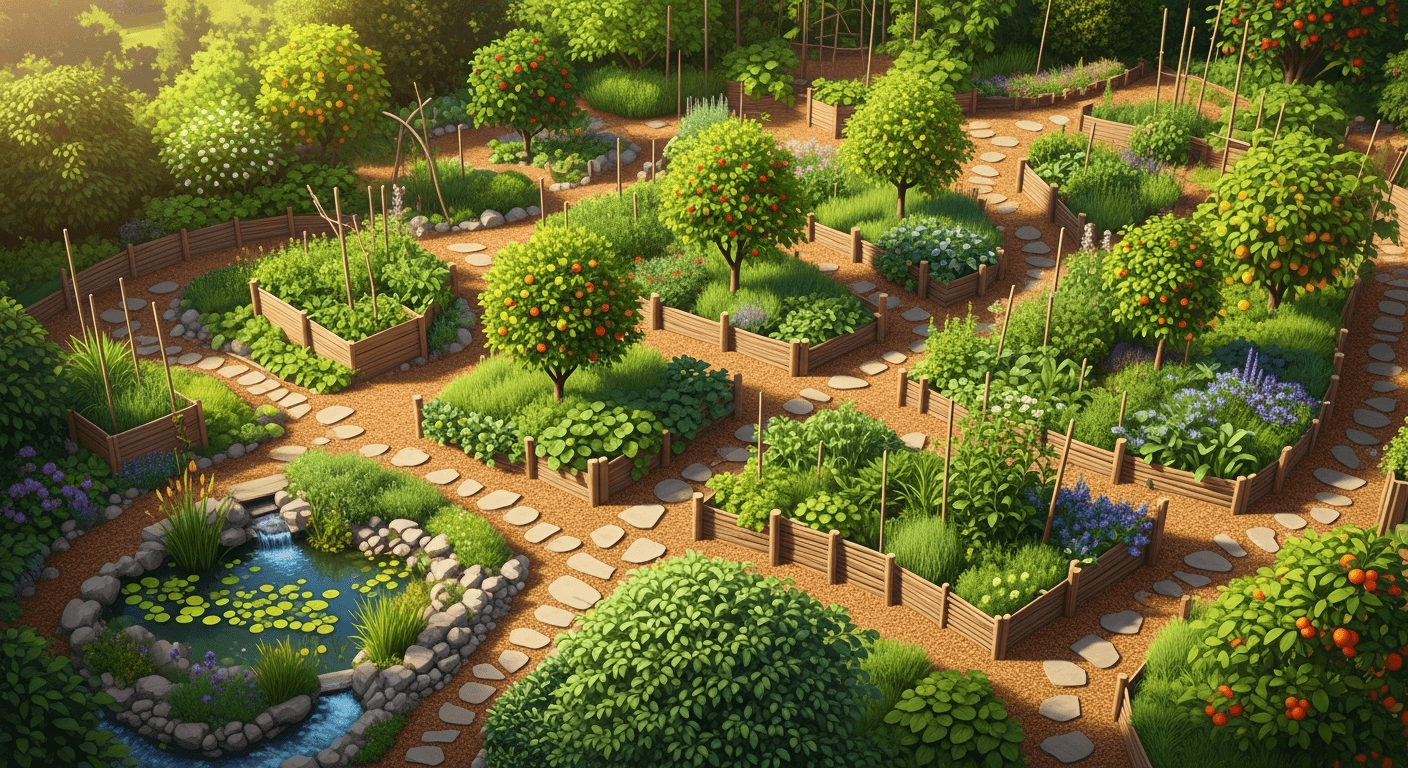

Understanding Permaculture Principles for Sustainable Living
Introduction
Have you ever wanted a garden that almost looks after itself and gives you fresh food? This idea is at the heart of permaculture. It is not only about gardening. It's also about thinking of new ways to use sustainability in your daily life. When you learn about the ethics of permaculture, you might feel different about your backyard and the world around you. If you want to hear about a permaculture design course or you just want to be a bit more sustainable, you are in the right place.
What Is Permaculture? Foundations and Key Concepts

Permaculture is a simple way to design spaces. It takes ideas from natural systems and uses them for building good and lasting environments. Bill Mollison and David Holmgren started this idea. They wanted to make the best use of nature. Permaculture is helpful at a time when we deal with climate change. By using renewable resources in smart ways, it gives us a way to make a positive impact.
You do not need a large farm to get started. You can use these ideas anywhere. You can use them on a small apartment balcony or a big property in the country. In this text, we will look into where this movement began. We will also talk about the main values that help shape what people do within it.
Simple Definition and Origins of Permaculture
Permaculture is a way to design places for people to live that copy how nature works. The goal is to make spaces that last a long time and take care of themselves. The word permaculture comes from "permanent agriculture" and "permanent culture." This shows how the idea is to build systems that stay strong over time and do not need a lot of outside help.
The idea started in Australia in the 1970s. Bill Mollison and his student David Holmgren came up with it. They saw how modern farming was hurting the land, and they wanted a new way to do this. They mixed ideas from ecology, landscape design, and farming to make a way to work with nature, not fight it. A big part of this is about "care of the earth."
Their work started the first permaculture design course (PDC). Now, you can find this course all over the world. It helps people learn how to design strong and useful systems in their own yards and neighborhoods. A PDC is a great way to pick up hands-on permaculture design skills and live a life that is better for the planet.
Core Ethics Guiding Permaculture Practices
Permaculture has three main ethics that guide what you do. These ethics of permaculture help you make good choices that have a positive impact. The first is "Care of the Earth." You should look after the soil, forests, and water. These things help all life and they need our care.
The second ethic is "Care for People." This means making systems that help meet our needs. We need food, a place to live, and friends. These systems should not take too much from other people or from the earth. It is about making safe and good places for all people.
The last ethic is called "Fair Share" or "Return of Surplus." This idea says you should take only what you need. If you have any surplus left, share it with your local community or put it back into the system. For example, you can give extra veggies from your garden to others or share compost with your neighbor. Sharing surplus like this helps people feel more connected and makes the local community stronger.
The 12 Principles of Permaculture Explained

Beyond the main values, permaculture gives you 12 simple rules to help you with your design. You can use these rules as guides to spot natural patterns. Then, you can bring them into your gardening or into how you live each day. These rules also show you ways to store energy, work in a better way, and build systems that work well and last.
These principles give a clear way to follow, from using slow solutions to seeing value in diversity. Next, we will go over what each principle means. We will also share how you can use them in your daily life in simple ways.
Beginner-Friendly Overview of the 12 Principles
For someone new, the 12 principles may feel like too much at first. But, these are simple ideas that help you work with nature. They ask you to watch the world around you. You should make choices after thinking about them. These rules also help you set up things that work well by themselves, just like natural ecosystems do.
Instead of going against nature, you learn how to use its power. You do this by using renewable resources in a smart way and by cutting down on waste. You also learn that small steps and slow solutions can make things better and easier to handle. The most important thing is to put the right plant in the right place. This lets nature help you and do most of the work.
Here's a quick look at some main ideas that come from the principles:
-
Observe and Interact: Take time to watch what goes on in your space. This helps you make good choices.
-
Catch and Store Energy: Try to keep things like rainwater and sunlight when you have a lot of them.
-
Produce No Waste: Make sure you use everything so nothing gets thrown out. Turn what you call "waste" into something useful.
-
Use and Value Diversity: Having many different plants and animals helps you build a stronger system.
-
Use Small and Slow Solutions: Small steps are simple to handle. Slow solutions are good for the long term and feel more natural to manage.
Practical Examples for Each Principle
Applying the 12 principles to your gardening and daily life can be simple. It's about making smart choices that take ideas from nature. For example, you can catch and store energy by putting a rainwater barrel in your garden to give water to your plants. You can also use food scraps for composting, which helps make your soil better for growing things.
These slow systems help you be strong over time. You do not have to buy fertilizer. You can plant legumes that put nitrogen in the soil. You do not need to use chemicals to kill pests. You can grow flowers that bring beneficial insects to your garden. Each principle can be used in a way that will make your garden work better and your way of living be more sustainable.
Here is a table. It has a simple example for each of the 12 principles.
Principle Practical Example 1. Observe and Interact Watch the sun's path across your yard before deciding where to plant your veggies. 2. Catch and Store Energy Install a rainwater harvesting system or make compost from kitchen and yard waste. 3. Obtain a Yield Plant a fruit tree that provides food for you and shade for other plants. 4. Apply Self-Regulation & Accept Feedback If a plant isn't thriving, replace it with one better suited to that spot. 5. Use & Value Renewable Resources Use fallen leaves as mulch instead of buying it from a store. 6. Produce No Waste "Chop and drop" garden clippings directly onto the soil to decompose. 7. Design from Patterns to Details Plant in spirals or keyhole beds to maximize space and access. 8. Integrate Rather Than Segregate Let chickens roam a garden bed to eat pests, till the soil, and add manure. 9. Use Small and Slow Solutions Start with one small garden bed and expand as you gain confidence and skills. 10. Use and Value Diversity Plant a mix of flowers, herbs, and vegetables to attract beneficial insects and confuse pests. 11. Use Edges and Value the Marginal Plant productive vines along a fence line or use the edge of a pond for water-loving plants. 12. Creatively Use and Respond to Change If a tree falls, use the wood for a raised garden bed (hugelkultur) or as firewood.
Comparing Permaculture Approaches
While people agree on the main ethics of permaculture, many early leaders made their own rules to guide practice. Some of the best-known ideas come from bill mollison and david holmgren, who started permaculture. If you know about their different views, you can find what works for you and your place. This helps you pick what fits the needs of your land and life.
Both frameworks try to build systems that last using renewable resources. But each one focuses on different parts of planning and making things. We will see how Holmgren's ideas match up with other ways people do this, and we will also look at how you can change them to fit different needs.
David Holmgren's Principles vs. Other Frameworks
David Holmgren's 12 principles are used a lot in permaculture design courses today. These principles are made to work as "thinking tools." They help you look at the world, use creativity, and change your plans to fit your particular situation. David Holmgren made these ideas so they are easy to feel and also simple to remember. This helps people who are new to permaculture pick up new skills and feel good about trying them out.
Other frameworks, like the ones first put forward by Bill Mollison, often focus on clear design strategies and facts about nature. Holmgren's principles, on the other hand, care more about the way you think and the steps you take. Mollison's ideas often give you action steps you can follow. One is not better than the other. They are just different ways to look at permaculture and permaculture design.
Here's a simple way to show the different focuses:
Aspect David Holmgren's Principles Bill Mollison's Approach Focus Thinking tools and ethical mindset Actionable directives and ecological rules Style Conceptual and philosophical (e.g., "Use and value diversity") Practical and instructional (e.g., "Each element performs many functions") Application Encourages creative adaptation to any situation Provides concrete strategies for design elements Audience Great for beginners and applying permaculture to all life areas Often preferred for detailed, site-specific landscape design
Application in Different Climates and Regions
One thing that makes permaculture strong is the way it can change and fit anywhere. The ideas in permaculture are not strict rules. Instead, they are flexible and people can use them anywhere---for example, in a tropical rainforest, in a dry desert, or in a busy city. The important thing is to watch how the local natural systems work and find the best use of nature for that place.
In a dry place, the main idea of "Catch and Store Energy" is about saving water. People use ways like making swales, which help to catch rainwater. They also use a lot of mulch so the water does not go away fast. This makes saving water easier.
In a temperate forest garden, things are done a little different. The focus there is to copy how a forest looks, using all the layers. This way, you can grow food that keeps growing on its own. It makes a good food system that does not need too much help for the long term.
Even if you live in a city apartment, you can use these ideas. If you have south-facing windows, you can grow herbs there to catch and use the sun's energy. A worm bin under the sink is a slow system that can turn food scraps into good fertilizer. This shows that you can turn waste into something useful. The principles let you work with what you have in your place, no matter where you live.
Permaculture in Everyday Sustainable Living
Permaculture is not just about gardening. It is a way of living. These principles can help you make a positive impact in your daily life. You can do this by using local resources and working to make your footprint smaller. When you think like an ecosystem, you can make life feel more connected. You will also feel that life gets more efficient and strong. Permaculture helps you feel close to the world around you.
From your kitchen to the area where you live, permaculture gives you simple steps on how to live in a way that is better for the world. The next parts will share tips you can use in your home, garden, and on bigger farms to help with this.
Incorporating Principles into Home Gardens and Urban Spaces
You do not need a large area to practice permaculture. A small space is enough for you to turn your home garden or balcony into a busy, green place. The main thing to do is to use your resources in a smart and creative way. Even an urban garden can show everyone how permaculture works.
Look at your space and see where the sun shines. Notice where the rainwater goes, too. Use these things to figure out the best spot for your plants. You can grow a lot of veggies, even if you only use a few pots or try a wall with a vertical garden. A simple way to improve your soil is to make compost from your kitchen scraps. That also helps cut down on waste.
Here are some ways you can use permaculture at home or in a city.
-
Vertical Gardening: You can grow plants up walls or on trellises. This is a good way to use the space you have if it is small.
-
Container Composting: Put your food scraps into a worm bin. This composting method turns those scraps into good fertilizer for your container plants.
-
Rainwater Harvesting: Set a bucket or a small barrel under a downspout. Then you can save rainwater and use it for your gardening.
-
Companion Planting: Grow herbs like basil next to your tomatoes. This can help keep pests away and make your plants grow better.
Beyond Gardening---Permaculture in Lifestyle and Farm Management
Permaculture does much more than help the garden. When you look at a bigger area, like a farm, these ideas help in many ways. Farmers can practice agroforestry. This means you grow trees and crops together. It helps make the system stronger and more diverse in the long term.
A farmer may also build a swale on the land's contour. A swale slows down rainwater. It lets more water soak into the soil. This prevents soil from washing away. Over time, it keeps the land healthy and gives more water to the area.
These principles can change your daily habits. You might join a PDC (permaculture design course) and learn new skills that help you use less energy, back local food, or fix things instead of always buying new ones. A big idea in permaculture design is to make closed-loop systems. For example, your food scraps and yard waste do not just go out as trash. They can be turned into organic matter you use for compost. This is a simple way for you to follow permaculture at home and feel good giving something back to the earth.
When farmers add animals, change crops, and grow strong soil using manure and compost, they use less stuff from outside. This helps them run a farm that can last a long time. This way of farming helps people feel close to the land. It also shows that they care about taking care of the land for many years.
Conclusion
To sum up, learning about permaculture is important for anyone who wants to live in a more eco-friendly way. The ideas of permaculture help us grow better gardens. They also help us live in peace with nature. When you use the main rules and ways of permaculture in your day-to-day life, you feel closer to the world around you. This also helps make the planet healthier for all people.
No matter if you are new to being a gardener or have done it for years, there is always more to know and try. Start your path toward sustainability now. Keep in mind, even small steps can make a big difference. Look into what permaculture can do, and turn your home into a lively and thriving place!
Frequently Asked Questions
Why are permaculture principles important for sustainable living?
Permaculture principles help us achieve sustainability. They show the way to work with nature and fix big problems, such as climate change. When you follow the ethics of permaculture, you waste less, save more resources, and build systems that make a positive impact. These steps do good for the environment and the people in your community.
Are there simple permaculture concepts for urban beginners?
Yes, for someone new to permaculture living in a city, there are easy ways to start. You can try container gardening right on your balcony. You can also use a worm compost bin to turn your food scraps into good soil. Try growing your plants up instead of out, which helps you use your small space better. These simple steps help you begin with permaculture and gardening, even if you do not have a big yard.
How do the 12 permaculture principles apply to forest or farm management?
On farms and in forests, permaculture ideas help shape what people do. For example, with agroforestry, farmers grow trees together with crops. A swale can also be built to help control water. These ways of working are good for natural ecosystems. They help boost biodiversity and keep the soil healthy. They also follow how nature works, so the land is strong, gives a lot back, and does not need many extra things from outside.