
Understanding the Seed of a Tree's Life Cycle
Introduction
The life cycle of a tree is a captivating tale of natural regeneration, a testament to nature's ability to renew and thrive. It all begins with a seed tree, a vessel carrying the potential for growth and renewal. From this humble starting point, a seed embarks on a remarkable journey, through various stages of development, ultimately contributing to the intricate tapestry of life within a forest. Each step in this life cycle plays a key role in the ongoing process of natural regeneration, ensuring the survival and propagation of tree species for generations to come.
The Journey from Seed to Sapling

The transformation from a tiny seed to a young sapling is a fascinating display of nature's ingenuity. This process, while appearing simple on the surface, involves a complex series of events orchestrated to ensure the seed's survival.
Imagine a seed, dormant yet brimming with potential, nestled in the earth. This seed of a tree of giants carries within it the blueprint for a towering presence in the forest, waiting for the right conditions to awaken its dark souls.
The Magic of Germination: Awakening the Seed
Germination marks the beginning of the seed's journey, a process that transforms it from a dormant entity to a vibrant expression of life. This awakening is triggered by a combination of factors, such as moisture, warmth, and oxygen, which penetrate the seed coat, activating its inner potential.
Within the seed, a tiny plant embryo lies waiting, its dark souls yearning for the light. As the seed absorbs moisture, it swells, and the seed coat softens, allowing the embryo to break free.
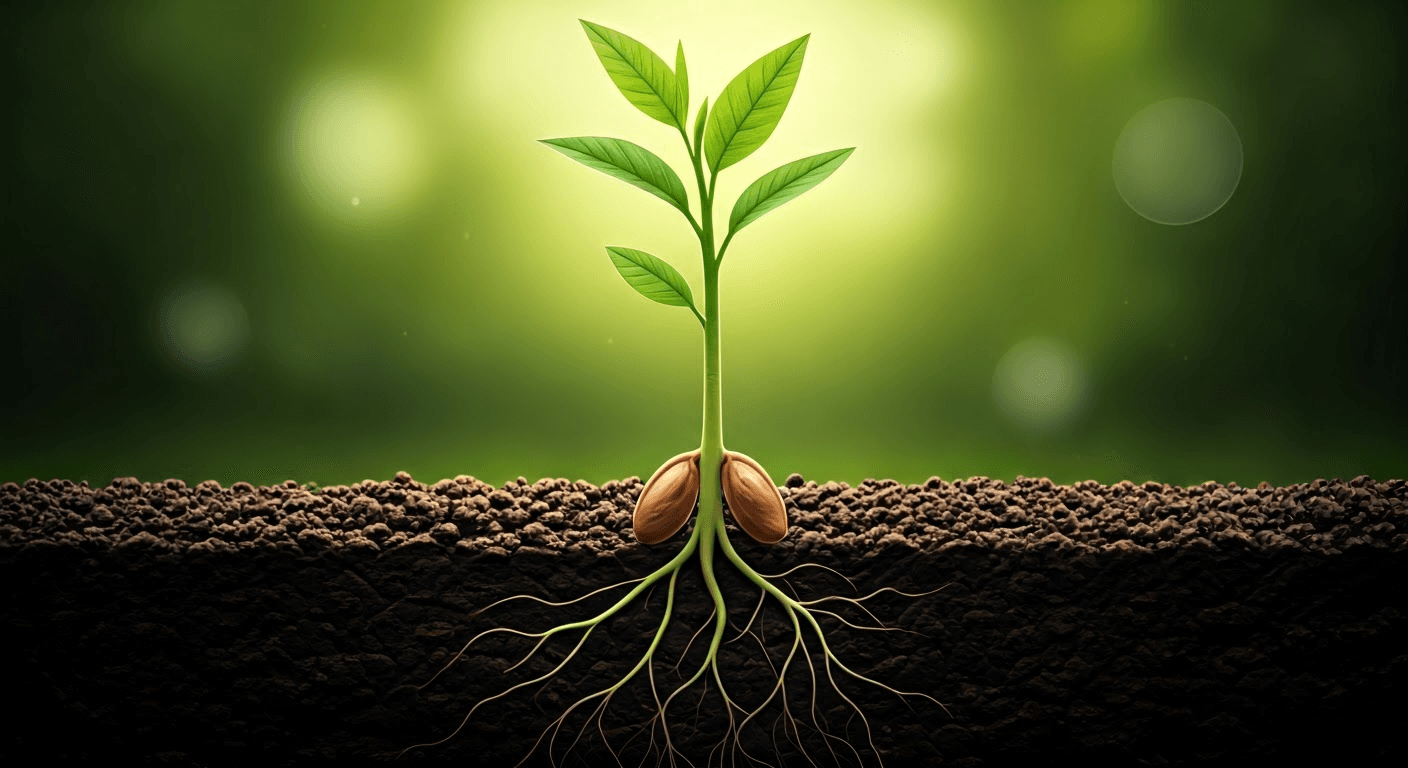
First, a root emerges, anchoring the seed to the ground and beginning the process of absorbing water and nutrients. Soon after, a shoot pushes upward, seeking sunlight, marking the seed's transition into a seedling.
The Growth of Seedlings: First Steps in a Tree's Life
With the emergence of the shoot, the seedling embarks on a new phase of growth, fragile yet determined to establish itself in the competitive world aboveground. It's a time of vulnerability, as the young plant is susceptible to various threats, from hungry herbivores to harsh weather conditions.
Natural regeneration is at play here, as the seedling draws upon its stored energy reserves to fuel its initial growth. The roots burrow deeper, seeking out water and nutrients, while the shoot stretches towards the sunlight, its tiny leaves working tirelessly to photosynthesize and produce food.
The seedling phase is a testament to the resilience of nature, a period where the foundation for a mighty tree is laid. As the seedling grows taller and stronger, it gradually transitions into the next stage, leaving behind its vulnerable beginnings and embracing the challenges of becoming a sapling.
Stages of Growth: From Sapling to Ancient Guardian

Once a seedling surpasses the height of three feet, it graduates to the sapling stage. This phase represents a period of rapid vertical growth and development, where the young tree focuses its energy on reaching for the sunlight and establishing a strong foundation. The sapling, no longer as vulnerable as a seedling, develops thicker bark and a sturdier trunk.
As it stretches skyward, the sapling prepares for its next stage -- transitioning into a mature tree capable of reproduction. It's a testament to the tree's resilience and its crucial role in the ecosystem.
Embracing the Sun: The Rise of the Sapling
The sapling stage is a time of remarkable transformation, a period where the tree undergoes significant structural changes that prepare it for its role as a pillar of the forest. The once slender trunk thickens, developing a wider circumference to support its increasing height. The bark, once smooth and delicate, becomes rougher, offering protection against the elements and potential invaders.
Driven by an insatiable thirst for sunlight, the sapling stretches higher, its branches reaching outward like arms embracing the sky. It's a competitive race for resources, and the sapling strives to maximize its exposure to the life-giving rays of the sun.
As the sapling matures, it undergoes internal changes as well. The root system expands, anchoring it firmly in the ground and enabling it to access water and nutrients from a wider area. This continuous growth and development prepare the sapling for its next stage -- the mature phase, where it will finally join the ranks of the forest giants.
The Mature Phase: When a Tree Comes into Its Own
The mature phase marks the culmination of years of growth and development. The tree, now a majestic presence in the forest, stands tall, its wide trunk a testament to its age and resilience. It has weathered countless storms, endured competition for resources, and emerged as a symbol of strength and endurance.
Now a fully-fledged member of the forest community, the mature tree plays a vital role in the ecosystem. It provides shade for understory plants, shelter for animals, and contributes to the overall health and biodiversity of the forest.
Here's a glimpse into the different stages of a tree's mature phase:
Stage Characteristics Early Maturity Begins producing seeds, crown fully developed Mid Maturity Peak seed production, largest overall size Late Maturity Growth slows, begins to decline
Conclusion
Understanding the seed's life cycle is akin to witnessing a miraculous journey of growth and resilience in nature. From the dormant seed to the towering tree, each phase symbolizes transformation and vitality. The magical process of germination, the tender growth of seedlings, and the majestic maturity of ancient guardians all contribute to the intricate tapestry of life. Embracing the sun, weathering storms, and standing tall exemplify the tree's unwavering spirit. Just like these seeds, we too have the potential for growth and renewal. Let us nurture our own seeds of potential and bloom into our fullest selves, mirroring the beauty and strength of nature's cycles.
Frequently Asked Questions
How long does it take for a seed to become a sapling?
The time it takes for a seed to reach the sapling stage depends on the tree species and growing conditions. Generally, germination can take weeks to months, and the seedling stage might last a year or more. The sapling stage then represents the next stage in natural regeneration, where the young tree focuses on height growth.
What factors are crucial for a seed's germination?
Germination, the awakening of a seed of a tree of giants, relies on a delicate balance of environmental factors. Moisture, warmth, and oxygen must be available in appropriate amounts to trigger the seed's dark souls and initiate the growth process.