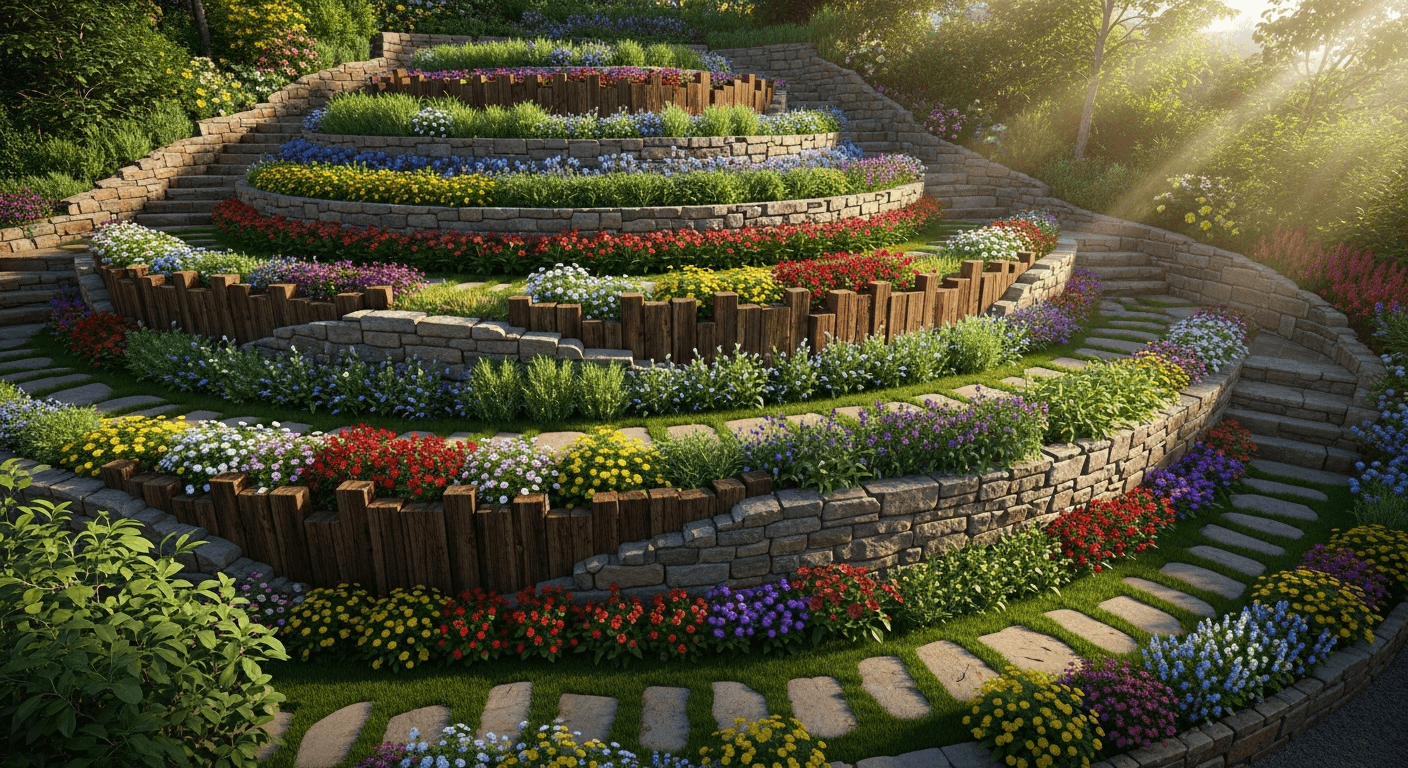

Explore Unique Terrace Landscape Styles for Your Garden
Introduction
Do you have a sloped yard that you feel you can't use? A terrace garden can be a great way to change your outdoor space. You can turn that hill into an area you can enjoy and use. When you build several flat levels, you open up your yard for gardening, hanging out, or just taking it easy. This guide is here to give you ideas and tips. These will help you make a terrace garden that has a nice look and lets you use all parts of your property.
Understanding Terrace Landscaping and Its Benefits

Terrace landscaping is not only about making a sloped yard look nice. It can help you manage ground that is hard to use. With this method, you cut a hillside into several flat spots. This can stop soil from being washed away and gives you spaces you can use.
This method is very good for erosion control and helps with good drainage and better water management. If you build it the right way, and add things that make sure there is good drainage, you can turn a slope that causes problems into something that adds value to your home. Let's see what terrace landscaping is and what the main advantages are.
What is Terrace Landscaping?
So, how do you make a terrace landscape for a sloped yard? Terrace landscaping shapes your sloped yard into several flat spaces, like steps. Instead of having a slope that is hard to use, the yard gets many flat areas you can use for planting, seating, or a small lawn. This level change gives your outdoor space its style and the way it works.
This way, people use walls that hold the soil or plant-covered slopes. These help keep the dirt in place and build clear layers in the yard. A yard with this style looks much more fun and lively than a flat one. It gives your property its own personality and feel. Every level can serve a different need, like a spot to grow veggies or a place for a patio.
You can set up the look of your terrace in a formal way using walls built with hard materials, or you can go for a more natural feel. If you want something softer, you could use slopes to link each level. Plant these slopes with ground cover or small shrubs. Doing this helps keep the soil in place and makes the terrace mix well with its surroundings.
Advantages for Sloped Yards and Erosion Control
Can terracing help with erosion control in your yard? Yes, it can. If you have a sloped yard, you know that water runoff and soil erosion can be big problems. This is even more true when there is a lot of rain. Terrace landscaping helps with this. It creates several barriers to catch water and stop it from washing the soil away. These steps make erosion control much easier on a sloped yard.
A strong retaining wall is the main support for this system. It helps keep the ground in place and stops your topsoil from moving downhill over time. This is important because it keeps your garden healthy and helps protect your property's base from any harm that can come when soil moves or water is not managed well.
Terracing helps with erosion control and can make it easier to handle drainage issues:
-
Reduces Runoff: The flat land on the terraces helps water stay in the ground. Water does not rush down fast like before.
-
Prevents Soil Loss: Retaining walls keep the soil in place on every level. The soil does not wash away.
-
Improves Drainage: Drainage pipes put behind each wall help take away extra water. This stops too much water from staying and breaking the wall.
-
Creates Usable Space: A slope that could not be used before now gives you space for gardens.
Key Design Principles for Terrace Gardens

When you set up your terrace garden, it is important to think about how it will look and feel. This is just as important as making sure the space can be used in a good way. A terrace garden should work well, but it should also give your eyes something nice to see. To make this happen, you need to look at the layout, the paths you will walk on, and the things you use to build it. Building visual interest in your terrace garden comes from these choices.
Every part of a garden matters. This includes the way the steps connect one level to the next, and how the walls feel to the touch. All these things work together to shape the final look. Now, let's check out some garden ideas for planning your space. These tips also help you add important things like walls and paths.
Planning Layout and Structure
Choosing the right design for your terrace garden starts with good planning. Before you do any work, think about what you want in this space. Do you see a group of garden beds for flowers or vegetables? Or do you want a dining patio on one level? Maybe you need a small lawn area for play. What you want will guide how many terrace levels you add, the height for each level change, and how everything is set up.
Think about the natural slope you have. A professional can help you know how many terraces you can build. They can also tell you what wall height will work best for your spot. This is a good time to plan how you will move between each level. It is important to create clear paths so people can get around easily and the garden looks good.
Here are a few planning tips:
-
Define a Purpose: Give each terrace a clear use. It can be a spot for sitting, a planting zone, or a play area.
-
Assess the Slope: Look at how steep your yard is. This will help you see how many terraces you need and how tall each one should be.
-
Plan for Access: Add steps or make paths that go gently up or down. This will help people move between each level in a safe and easy way.
-
Consider Sun Exposure: Check which parts get the most sun so you can decide where to put a garden bed.
Incorporating Pathways, Walls, and Retaining Features
Pathways and walls are the main parts of your terrace garden. They also help add more visual interest to your outdoor space. A retaining wall keeps the soil in place, but it also gives you a chance to make your garden look better. You can use natural stone if you want a look that lasts over time. If you like a clean and even look, you can go with concrete blocks. Both choices help your terrace garden stand out and make your outdoor space feel good.
Steps connect the different levels in the garden. They are useful and also help your eyes move through the area. You can choose materials like flagstone, poured concrete, or blocks that match your retaining walls to make the steps stand out. These parts break up tall areas and help people feel welcome when they walk through the garden.
If you want your terrace garden to look good, try adding some softer touches. You can use trailing plants that hang over the edges of a retaining wall. This helps to make the hard lines feel softer. It is also a good idea to put lights along the pathways or on the walls. These lights will give your garden a nice feel at night. Make sure the drainage is set up well, too. The right drainage is very important because it stops drainage issues from happening. It also helps keep your retaining wall strong and safe for many years.
Choosing Materials for Terrace Landscape Walls
The material you pick for your retaining wall will change the way your terrace looks. It also has a big effect on how strong the wall is and how much it will cost you. There are many material options you can choose from. Each one brings its own good points. Some common choices are natural stone, timber, brick, and concrete blocks.
You need to think about what look you want, how much money you can spend, and the weather in your area. Some materials do well in wet places. Other choices look more natural. Let's take a look at some common options and see how to pick the best one for where you live.
Popular Choices: Stone, Timber, Brick, and Concrete
When you want to pick what material to use for terrace walls, there are a few good choices. Natural stone like basalt or granite looks nice and never goes out of style. It also fits in well with the look of the outdoors. But, the price for this type of stone is usually higher. A lot of people use concrete segmental blocks instead. These blocks are strong, last a long time, and come in many different colors. They also cost less most of the time.
If you want something that looks softer and more natural, you can use tumbled concrete block or timber. Brick is also a good choice if you like a classic and formal feel. Each of these materials is put in place in a different way. They also need different work to stay in good shape over time. So, be sure to think about these things before you pick one. For example, working with natural stone that is not the same shape takes more skill than working with concrete blocks that all look alike.
Here is a quick look at some common retaining wall materials:
Material Pros Cons Concrete Block Durable, cost-effective, wide color range Can look less natural than stone Natural Stone Timeless beauty, very durable Higher cost, requires skilled installation Timber Natural look, can be DIY-friendly Shorter lifespan, susceptible to rot Brick Classic, formal appearance Can be more expensive, requires a solid footing
Selecting the Right Material for Your Regional Climate
The weather where you live is important when you pick the best material for your terrace walls. If you are in a place with a lot of rain and lots of freezing and melting, you need walls that can handle water and changes in temperature. The walls should not crack or break over time. Concrete segmental blocks are a good choice for these wet places. These blocks are made to stay the same and last a long time.
In places that are more dry and hot, you get more material options to use. But you still need to think about how the sun will affect some materials like timber. The sun can dry out timber and cause it to bend after some time. Stone and concrete are very strong in both wet and dry conditions. So, they are a good pick in most areas.
In the end, it is best to pick a material that works well for your area. For people in the Pacific Northwest, it is good to use something that stands up to a lot of rain, like concrete block or natural basalt. If you want to have plants that are drought resistant, make sure you use wall material that fits a water-wise garden plan. This will help your yard look good and be easy to care for.
Steps to Building a Terraced Garden Bed
Building a terraced garden bed is something many people can do. It can change the look of a slope in a big way. You will need to get the space ready first. After that, you can start making the garden tiers. If you plan each step in the right way, your new garden bed will look good and stay strong for years.
The main goal here is to make several level planting spaces. To do this, you must get the ground level and build a strong base. Let's go through the main things you need to do, starting with getting the area ready and moving on to building safe and strong walls for your level change.
Site Preparation and Leveling
The first thing to do when building a terraced garden bed is getting the spot ready. Start by clearing away all plants, rocks, and anything else from the area. Then, mark out the size and shape of your planned terraces. You can use stakes and string for this to help you see how the garden bed will look on the slope. This part is important. It helps make sure your finished garden bed is in the right place.
Now, here's your text in simple spoken English:
The next step is to dig and make things even. To make each terrace, you will cut into the higher part of the slope. You will use the dirt you dig up to fill in the lower side. This helps you make a flat area. Each platform should be flat from one side to the other. You should also make the ground tilt back just a little. This small tilt will give you good drainage and move water away from the front wall.
When you do this work, keep an eye on the soil. If the soil is thick and full of clay, you might need to add something to make water move through it better. This will help your plants grow strong and healthy. After you finish cutting the levels, you can start building the retaining walls. These will keep your new garden beds in place.
Constructing Safe and Sturdy Garden Tiers
After you get the site ready and flat, you can start building garden tiers that are safe and strong. Begin by making the retaining wall for the lowest terrace. Then, move up the slope one level at a time. A strong base is key for any wall that lasts. So, make sure you start with a flat layer of packed gravel.
For any retaining wall, you must have good drainage. This helps stop drainage issues before they start. A main reason a wall can fall is too much water pressure pushing on the back of the wall. To keep this from happening, add a drainage pipe with holes at the bottom of the wall. Backfill the wall with clean gravel. Also, use filter fabric to stop soil from blocking the drain system. These steps make sure your wall stays strong and safe over time.
Follow these big points when you build your tiers:
-
Start from the Bottom: You should always start with the lowest retaining wall first. Then, build up to the next part. This will help you get a strong and steady garden bed.
-
Install Drainage: Add a pipe with holes and put gravel backfill behind each wall. This helps water get out, so the garden bed and the retaining wall stay safe.
-
Check for Level: Keep using your level tool as you work. Make sure each row of your wall is straight and even.
-
Backfill As You Go: As you finish each step, fill the space behind the wall with soil. Do this to build up your garden bed layer by layer with your retaining wall.
Plant Selection for Sunny and Shaded Terrace Gardens
Choosing the right plants is what makes your terrace garden feel complete. Each level can feel different, so you must pick your plants based on what the spot is like. The upper tiers can turn into a sunny spot, and the soil can drain water fast there. The lower levels get less sun and keep more water. So, look at every part before you plant.
If you pick plants that match the light and water they need, and that have good drought tolerance, your garden will grow well and you won't have to do very much. Here are some good choices for your new terraced landscape. These will work for spots that get a lot of sun, as well as places that have more shade.
Best Plants for Sunny Terrace Spots
The best plants for a terraced garden in a sunny spot are the ones that do well in full sun and dry conditions. You can choose plants that love heat for the upper terraces, as these spots stay in the sun all day. The soil on these upper terraces drains well, so it's good to pick drought-resistant plants for these areas. These plants will not need a lot of water after they are settled in.
Plants like russian sage have silvery foliage and tall, purple flowers. They are great choices for the garden. Lavender is also a top pick. It gives beautiful blooms and has a nice smell. Both of these plants do well in the conditions you find in upper terraces. They do not need much work to grow well. Ornamental grasses add more texture and movement to your yard. They also do well in these spots.
Here are some top plant choices for a sunny spot:
-
Lavender: This is a classic aromatic herb. It grows best in full sun and well-drained soil.
-
Russian Sage: This tough perennial has lavender-blue flowers that last a long time.
-
Sedum: This is a succulent plant that is very drought resistant. You can find it in several forms.
-
Yarrow (Achillea): This hardy perennial has flat-topped bunches of small flowers. It can grow well even if you forget to care for it.
Shade-Loving Options for Lower Levels
The lower terraces in your garden can be great places for shade plants. These spots may be under the house's shadow or under upper levels, so they do not get much direct sunlight. Because of this, the ground is often cooler. It can also hold more water. This makes the lower terraces perfect for plants that do not grow well in strong sun. Even places with deep shade can look beautiful if you choose the right plants.
If you need plants for shadier spots in your terrace landscaping, coral bells are a great choice. People really like them for the many colors of their leaves. Another good plant is the hosta. Hostas have big leaves and often grow well where most plants do not. These tolerant plants usually do their best when they get regular watering.
You can try these plants that like shade for your lower terraces:
-
Hosta: This is one of the most popular shade plants. You can find it in many different sizes and colors.
-
Coral Bells (Heuchera): People like this plant for its bright leaves. It adds color to shady spots. The plant is also called coral bells.
-
Astilbe: This plant makes soft, fluffy flowers. It also has leaves that look like ferns.
-
Japanese Painted Fern: This is a strong fern. It has eye-catching fronds in silver, green, and burgundy.
Conclusion
In the end, trying out new terrace landscape styles can turn your garden into a great place to relax outside. If you learn about how good a terrace garden can be and follow some key design tips, you will set yourself up for success. Picking the best materials also matters a lot. A terrace garden does more than just look nice; it makes your yard feel fresh and helps nature, too. These gardens work well for sloped yards or when you just want to add visual interest. You can plant different things for the sun or shade. So, feel free to try things out and see what makes your space look and feel its best. If you want help, you can get in touch for a free chat and begin working on your dream terrace garden now.
Frequently Asked Questions
How does terrace landscaping help with low-maintenance gardening?
A terrace garden helps you do less work with gardening. You can put plants that need the same things in the same spot. You might use the sunny, high-up parts for plants with good drought tolerance. Using ground cover or other resistant plants is a good idea. They keep weeds away and help hold water in the soil. This way, you spend less time taking care of your garden.
How much does it cost on average to build a terraced landscape in the U.S.?
The cost to build a terrace garden in the U.S. can be very different. If you want to do a simple project on your own with short walls, you may spend a few thousand dollars. If you hire someone to do the work and use many levels, natural stone, and lots of digging, it can cost from $25,000 to over $100,000. The price depends on your material options and how complex the site is.
What design trends make terrace gardens visually appealing?
To create more visual interest, many of the new design styles use materials like stone with wood. Adding ornamental grasses can give the garden some nice feel and movement. A Japanese maple will be a focus point that will stand out. Small water features will make calming sounds and help the space feel more peaceful. These ideas make the garden look and feel better.