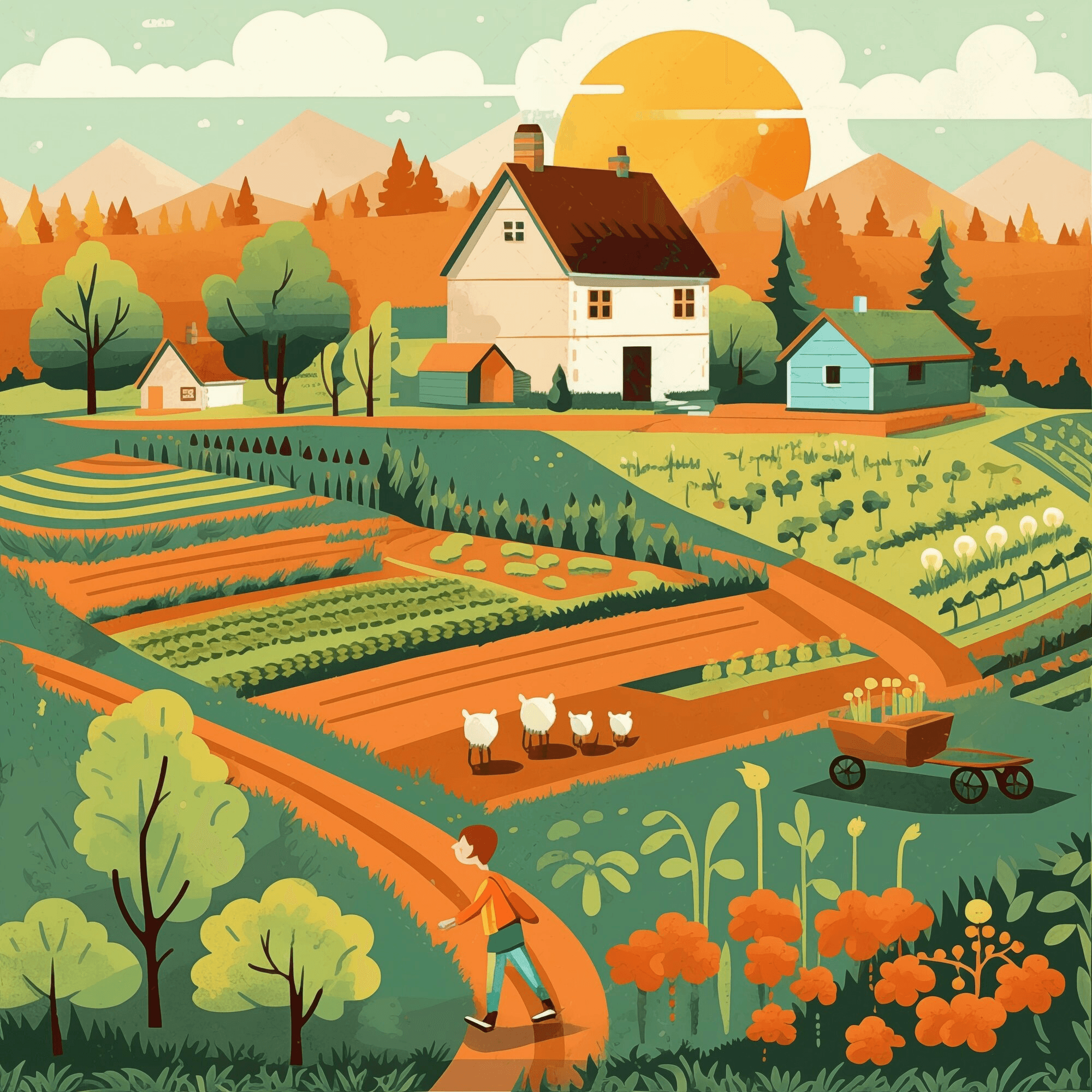

Terrace Agriculture: An Overview
Introduction
Terrace agriculture stands as a testament to human ingenuity, transforming sloping landscapes into productive agricultural land for centuries. This method involves shaping steep slopes into a series of level platforms or terraces. These platforms act as a natural barrier against soil erosion, slowing down water runoff and allowing it to seep into the ground, making it a highly effective soil conservation practice. By enabling cultivation on otherwise unusable land, terrace agriculture provides a sustainable solution for food production in hilly and mountainous regions.
Understanding Terrace Agriculture

Imagine gazing upon a hillside adorned with gracefully sculpted steps, each level bursting with life---that is the essence of terrace agriculture. It involves transforming sloping terrain into a staircase-like landscape where each level serves as a flat surface for cultivating crops. This time-tested practice, found in different corners of the world, addresses the challenges of farming in hilly and mountainous areas.
The primary principle behind it lies in its ability to combat soil erosion. By reducing the speed of water runoff, terrace farming prevents the topsoil from being washed away, preserving the fertility of the land. This aspect becomes even more critical in regions with heavy rainfall where unchecked runoff can lead to severe soil degradation.
The Basics of Terrace Farming
Terrace farming encompasses various methods, each adapted to specific landscapes and agricultural needs. However, the underlying principle remains the same: to reshape the slopes into level or gently sloping platforms that hold water and soil effectively. This method proves particularly beneficial in hilly and mountainous areas where conventional farming practices would be impractical.
Two common types of terrace farming include contour terraces and bench terraces. Contour terraces follow the natural contours of the terrain, creating a series of level platforms that curve along the hillside. This method minimizes disturbance to the natural landscape and is often used when the slopes are not excessively steep.
Bench terraces, on the other hand, involve constructing flat platforms that resemble steps cut into the hillside. This method requires more extensive earthworks but creates larger, level areas suitable for crops that require ample irrigation, such as rice.
Historical Significance in the United States and Beyond
The origins of terrace farming can be traced back to ancient times, evident in civilizations across the globe. The practice emerged independently in various regions as a response to the challenges of farming in hilly and mountainous areas. Archaeological evidence suggests that terrace systems were already in use thousands of years ago in parts of Asia, South America, and the Mediterranean.
One of the most iconic examples of ancient terrace agriculture can be found in the Philippines. The Banaue Rice Terraces, etched into the slopes of the Cordillera mountains, showcase the ingenuity of the Ifugao people. These awe-inspiring rice terraces, estimated to be over 2,000 years old, were built primarily by hand and illustrate a harmonious relationship between humans and their environment. This extraordinary feat of engineering has earned them recognition as a UNESCO World Heritage Site, serving as a reminder of the enduring legacy of this agricultural practice.
From the breathtaking rice terraces of Southeast Asia to the meticulously crafted agricultural terraces of Machu Picchu in Peru, these ancient systems offer a glimpse into the past. They highlight the resourcefulness of earlier civilizations and their ability to overcome environmental challenges. The legacy of terrace agriculture continues to inspire, not only as a sustainable farming practice but also as a testament to human ingenuity.
The Benefits of Terrace Agriculture

The enduring appeal of terrace farming lies in its numerous benefits, many of which directly address the challenges of farming on slopes. By slowing down water runoff, terrace systems effectively combat soil erosion, conserving the precious topsoil crucial for healthy crops. This also leads to improved water retention as water percolates into the soil instead of rushing downhill, reducing the need for frequent irrigation.
Moreover, terrace agriculture promotes efficient water management by allowing for controlled irrigation and drainage. This prevents waterlogging and helps in maintaining optimal soil moisture levels for plant growth. Additionally, these systems can expand the area available for cultivation in hilly regions, enabling farmers to cultivate a wider variety of crops.
Erosion Control and Land Conservation
Soil erosion poses a significant threat to agricultural productivity, particularly in hilly areas with steep slopes. Unchecked runoff can strip away the nutrient-rich topsoil, leaving behind barren land susceptible to further degradation. Terrace farming offers a powerful solution to this challenge by acting as a natural barrier against erosion.
The stepped structure of terraces effectively reduces the velocity of runoff. As water flows down the slope, it encounters these level platforms, which slow it down, giving the water more time to be absorbed into the ground, minimizing soil loss and promoting conservation of soil. Moreover, the presence of vegetation on the terraces further enhances soil stability, anchoring the soil particles with their roots.
In addition to protecting against rainfall-induced erosion, terrace farming also helps mitigate the risk of landslides. The terraces stabilize the slope by breaking it down into smaller, more manageable sections, reducing the likelihood of large-scale soil movement. This aspect makes it an invaluable practice in regions prone to landslides, ensuring the long-term viability of agricultural land.
Water Management and Crop Irrigation
Water management often presents a significant challenge in sloped terrains. Runoff water tends to flow rapidly downhill, resulting in water scarcity in some areas and excessive water accumulation in others. Terrace agriculture addresses this issue by facilitating more efficient water use.
The level platforms of terraces act as miniature catchments, capturing runoff water and allowing it to infiltrate the soil gradually. This enhances water conservation, ensuring that crops have access to moisture even during periods of low rainfall. Furthermore, terraces help regulate irrigation, preventing both under-watering and overwatering.
Some key features of terrace systems that contribute to effective water management include:
- Level platforms: Create a series of small, level fields that slow down water flow.
- Bunds or ridges: Built along the edges of terraces to prevent water from overflowing and to further enhance infiltration.
- Drainage channels: Strategically placed to direct excess water away from the terraces, preventing waterlogging and soil erosion.
These features work in harmony, optimizing water distribution and absorption, leading to healthier crops and reduced water wastage.
Implementing Terrace Farming Techniques
Implementing terrace farming demands a thoughtful approach that considers the specific characteristics of the land and the type of crops to be cultivated. The first step involves a thorough assessment of the site's topography, soil type, and rainfall patterns. Consulting with experienced agriculturists familiar with the local conditions is crucial.
The design and construction of terraces should aim to minimize soil disturbance while maximizing the land's potential. Using appropriate tools and techniques for terracing is essential. These might range from traditional hand tools to modern machinery, depending on the scale of the project and accessibility to resources.
Key Steps in Developing Terrace Farms
Creating successful terrace farms involves a series of well-defined steps, each contributing to the overall effectiveness of this agricultural practice. The initial step focuses on planning, which includes assessing the slope, soil type, and water availability. Understanding these factors helps determine the most suitable type of terraces and their optimal dimensions.
Next comes the crucial phase of constructing the terraces. This involves shaping the land into level platforms, ensuring proper drainage, and building retaining walls or bunds to prevent soil erosion. Depending on the scale of the project, this might require manual labor, animal power, or machinery. Choosing the right method often depends on factors such as accessibility, cost-effectiveness, and local traditions.
Once established, cultivating crops on the terraces requires careful management to maintain soil fertility and maximize yields. Utilizing organic farming practices, such as crop rotation, cover cropping, and composting, helps maintain soil health and reduce reliance on synthetic fertilizers.
Modern Innovations in Terrace Agriculture
While the fundamental principles of terrace farming remain timeless, modern innovations have brought about significant improvements to enhance their efficiency and sustainability. These advancements focus on various aspects, from site assessment and design to construction techniques and ongoing maintenance.
Modern surveying techniques, such as Geographic Information Systems (GIS) and Global Positioning Systems (GPS), provide precise data on topography, soil composition, and water resources, aiding in the design of optimal terrace systems tailored to the specific site conditions. Additionally, new materials and construction methods, including geotextiles and reinforced earth walls, offer more durable and environmentally friendly alternatives for building retaining walls and stabilizing slopes.
Furthermore, incorporating sustainable practices into modern terrace farming systems helps maximize their long-term benefits. Here's a table highlighting some of these innovations:
Innovation Description Precision leveling Utilize laser-guided equipment for accurate leveling of terraces, ensuring optimal water distribution and minimizing soil erosion. Drip irrigation Delivers water directly to plant roots, reducing water consumption and minimizing nutrient leaching. Cover cropping Planting cover crops between main crops helps control weeds, prevent soil erosion, and enhance soil fertility. Terracing machinery Specialized machinery for terrace construction, such as terrace plows and excavators, makes the process more efficient and less labor-intensive, particularly for larger-scale projects.
By embracing these modern innovations, we can enhance the effectiveness of this ancient practice, making it even more relevant in addressing contemporary agricultural challenges.
Challenges and Solutions in Terrace Farming
Despite the numerous advantages, terrace farming does not come without its challenges. One significant obstacle lies in the initial investment required for constructing the terraces. This labor-intensive process often necessitates substantial investment, posing a barrier for small-scale farmers, especially in regions where access to machinery and resources is limited.
Another challenge arises from the potential for waterlogging if terraces are not properly designed or maintained. Insufficient drainage can lead to water accumulation, damaging crops and even causing terrace collapse in extreme cases. Therefore, regular maintenance, including clearing drainage channels and repairing any damage to the terrace walls or bunds, is essential for the long-term success of this farming system.
Addressing Common Obstacles
Constructing and maintaining terraces in challenging terrains often presents obstacles that require specific solutions to ensure the system's effectiveness. For instance, working on steep slopes requires careful planning and execution to ensure the stability of the terraces and the safety of the workers. Constructing retaining walls or bunds with durable materials and incorporating appropriate drainage channels can prevent slippage and erosion on such slopes.
Another common obstacle relates to managing soil fertility on terraces. The removal of topsoil during terrace construction can disrupt the natural soil profile. To address this, farmers often need to amend the soil with organic matter, such as compost or manure, to replenish nutrients and improve soil structure. Additionally, implementing crop rotation strategies and incorporating nitrogen-fixing legumes into the cropping system can enhance soil fertility naturally.
In some types of terraces, such as bench terraces, navigating farm machinery can be difficult due to the presence of point rows---the narrow, pointed ends of terraces. Using smaller machinery or employing hand tools for tasks like tillage and harvesting might be necessary in such cases. Alternatively, opting for contour terraces, which follow the natural lay of the land, can provide easier access for machinery.
Sustainable Practices and Solutions
Ensuring the long-term sustainability of terrace farming requires incorporating practices that conserve resources and minimize environmental impact. Integrating vegetation into the terrace system, such as planting trees along the edges or incorporating cover crops, serves multiple purposes. Trees provide shade, reducing water evaporation and soil erosion, while their roots help stabilize the soil structure. Cover crops, grown between main crops, suppress weeds, prevent soil erosion, and add organic matter to the soil when incorporated back into the land.
Another important aspect involves promoting biodiversity within and around the terraces. Encouraging the growth of native plants along the edges and integrating insectary plants to attract beneficial insects can help create a more balanced ecosystem. This reduces the need for synthetic pesticides and promotes the health of the overall farming system.
Managing water resources wisely is crucial in terrace farming. Implementing efficient irrigation techniques, such as drip irrigation or rainwater harvesting, minimizes water wastage and reduces reliance on external water sources. Furthermore, incorporating strategically placed waterways into the design of the terraces helps channel excess water away from the fields, preventing waterlogging and erosion.
Conclusion
Terrace Agriculture offers a sustainable solution to land conservation and effective crop irrigation. By implementing terrace farming techniques, erosion control is enhanced, and water management is optimized. With modern innovations, such as sustainable practices and solutions, terrace agriculture can thrive in various climates. Addressing challenges through sustainable practices ensures the longevity and success of terrace farming. To learn more about how terrace agriculture can benefit your land and crops, explore our Frequently Asked Questions section for detailed insights. Start your journey towards efficient and sustainable agriculture practices today!
Frequently Asked Questions
What Makes Terrace Agriculture Sustainable?
Terrace systems are inherently sustainable due to their effectiveness in soil cover, water conservation, and erosion control. By minimizing runoff and promoting infiltration, they prevent soil degradation and ensure the long-term productivity of the land, often being the only way to farm in certain topographies.
Can Terrace Farming Be Practiced in All Climates?
While terrace cultivation is most common in hilly or mountainous regions, its suitability varies with climate. It's prevalent in areas with significant rainfall for paddy or rice fields, but adaptations are necessary for arid climates. Elevation also plays a role, affecting temperature and crop choices.
How Does Terrace Farming Affect Biodiversity?
The impact of terrace farming on biodiversity depends on implementation. If done sustainably with native species and diverse crops like in the rice terraces of the Philippine Cordilleras, it can enhance biodiversity on a previously bare hillside compared to large-scale monoculture, for example, vineyards.