
What Does Permaculture Mean? A Beginner's Guide
Introduction
Have you ever thought about working with nature instead of going against it? That is what permaculture is all about. Permaculture came from the words "permanent agriculture." Now, it means something much bigger. It is a way to look at the world that helps bring about sustainable development. A permaculture design lets you build ways to grow food, make homes, and bring people together. These ways are strong, simple, and fit well with the natural world. This guide will help you understand what permaculture is. You will see how you can use its ideas in your own life.
Understanding the Meaning of Permaculture

The essence of permaculture is in how the design system brings everything together. Bill Mollison came up with this idea. It is a way to mix land, resources, and people so they can work as one. The goal is to build agricultural systems that do not make waste. Some other ways to help the earth can feel limited. Permaculture can be used in all parts of life.
So, how is this way different from things like traditional farming or organic gardening? Permaculture is not just about using certain ways to grow food. It is more about how different things work together in a system. Permaculture looks at building a full ecosystem, not only putting some vegetables in the ground. We will look at how these choices are not the same, where permaculture comes from, and what it really means to practice permaculture.
What Does Permaculture Mean?
Permaculture is about designing the way people live by looking at how nature works. The word "permaculture" comes from "permanent agriculture" and "permanent culture." This shows that the goal is to make systems that keep going on their own and last many years. The idea is to match people and land together in a good way. It helps give food, energy, and shelter to us, and it does this in a way that does not harm the earth.
Permaculture design does not go against natural systems. It works along with them. The main point is to watch how nature acts and learn from it. Then, people use what they see in their own spaces like gardens, homes, and with people around them. By doing this, they can make places that stand strong, have many kinds of life, look nice, and provide what people need.
The whole system follows a group of ethics and design principles. These rules help you look at, collect, and keep energy. You also try to make no waste. They help you to plan the land so you can be more like nature. Nature shows us how to be more efficient and have plenty with what we have. The design principles will guide you to make better choices and use what is available.
Origin and Evolution of the Term
The permaculture movement started in Tasmania, Australia, in the mid-1970s. It was started by bill mollison, who was a researcher and loved nature, and his student david holmgren. They saw how modern industrial farming was hurting the land. They wanted to find a better and more caring way to work with nature.
They made a system that brought together plants that live for years and animals. This mix was good for people and helped the land, too. Their first thoughts about this were shared in early permaculture literature called "Permaculture One." This book showed the basic ideas for a different way to think about how people live and farm.
The idea of permaculture has changed a lot since it started. At first, it was all about food production. Now, it is also about regenerative agriculture and sustainable living. Permaculture is not just on farms. It covers the way people build homes, save water, and even how a group of people can work together to support each other. The goal is to make life better for everyone and to help the earth, too.
Distinguishing Permaculture from Traditional Gardening and Farming

You may ask how permaculture is not the same as organic farming or conventional agriculture. These all want to grow food, but the way they do things is not the same. Organic farming works by not using artificial pesticides or fertilizers. Permaculture does more than that.
Permaculture is a design system that looks at everything as one big picture. It is not just rules for how to grow crops. In this system, every part works with the other parts. The goal is to build a place like nature, where things help each other and can take care of themselves. With permaculture, the aim is for the land to keep going on its own, just like things do in the wild.
Here's a quick comparison:
-
Focus: Conventional agriculture usually grows one crop at a time (monoculture). On the other hand, permaculture looks at having many types of plants and animals together. It cares about how these all interact.
-
Design: Permaculture uses clear design principles. It puts things in the best place in the system to help each other. This cuts down on work and waste.
-
Goal: The main goal of permaculture is to make a closed system. In this system, waste can be used again as a resource. This is not like the straight-line, high-input method of most conventional agriculture.
Key Concepts Behind Permaculture
To really get permaculture, you have to know the main ideas behind it. This is a design system that uses some basic ethics and rules to guide each choice you make. Its goal is to make a positive impact by building things that are just as strong and varied as natural ecosystems.
This way of thinking helps you look at how what you do matters in the world around you. If you follow its main ethics and ideas, you can make a permaculture farm and change your life so things work well, take care of themselves, and give good things to all living things. Now let's talk about what a permaculture farm is and the ethics that help drive this whole system.
Permaculture Farm Meaning and Its Relevance Today
A permaculture farm is not just used for food production. It is a new way of thinking about how people work on the land. A permaculture farm is a change from old agricultural systems that can hurt nature. Instead of using lots of machines and chemicals like traditional farms, a permaculture farm tries to be like a natural ecosystem.
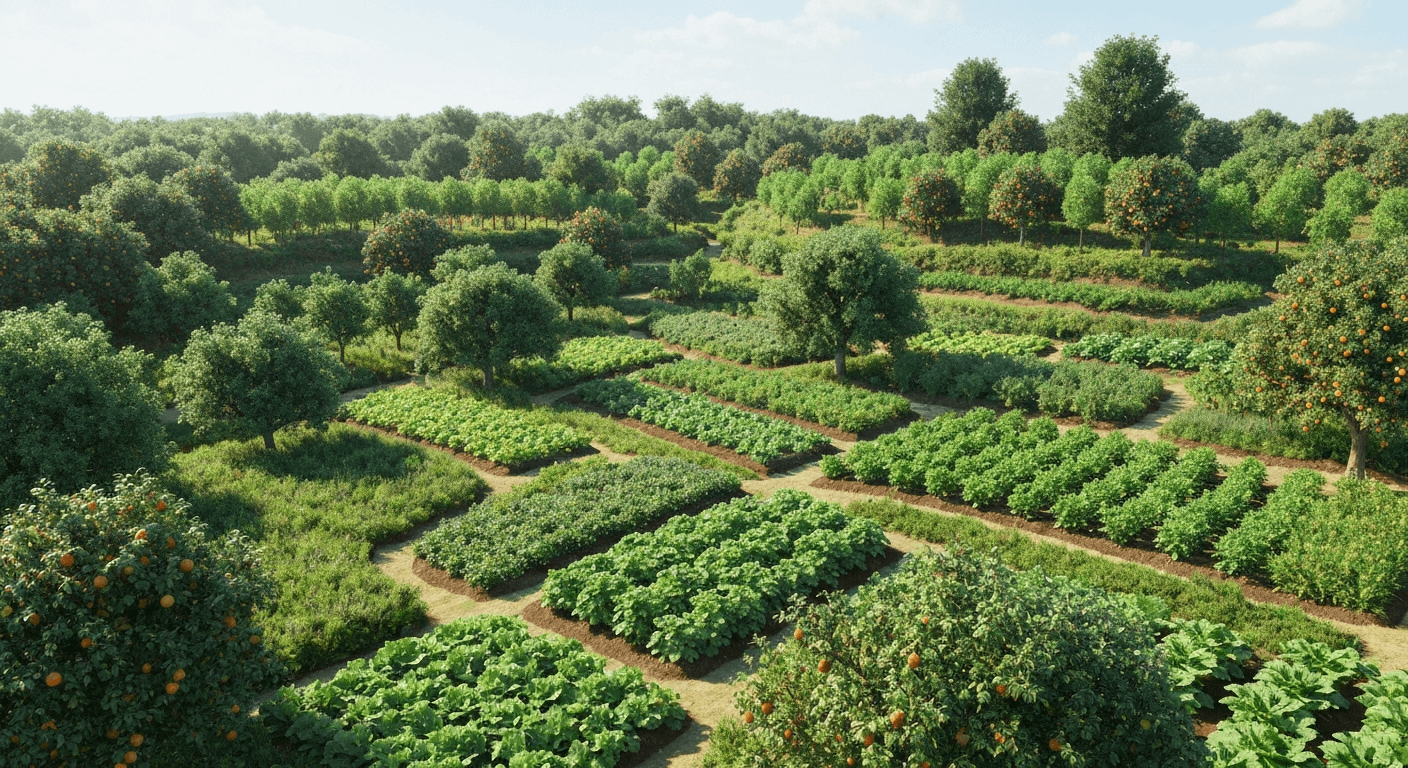
The focus of permaculture farming is to build a system where all parts help each other. In this kind of farming, chickens can do many things. They help till the soil, eat the bugs, and their manure adds good stuff to the ground for crops that will grow later. When you practice permaculture farming, you also try to keep water on your land. What is waste in one part the system can be used in another part. That is how everything works together and nothing is wasted.
In today's world, this way of thinking is more useful than ever. There are now more worries about climate change and food security. Permaculture gives people real answers. It helps make strong, local food systems. These systems are good for people and the planet.
The Foundational Ethics of Permaculture
Permaculture is built on three key ideas. These are Earth Care, People Care, and Fair Share. These simple points work like a guide for all permaculture principles and actions. They help you make sure what you do is good for the earth and people. They also remind you to be fair and responsible in your work.
Earth Care is about knowing that the earth gives us all life. We need to look after it. We should care for the soil, trees, and water. The way we use the land needs to help natural resources grow instead of using them up. This means we have to work with the planet, not fight against it.
People Care is all about meeting human needs like food, shelter, and community. It does this in a way that can last for a long time. Fair Share means we see that there is a limit to what we can use. If we have more than we need, we need to share it. This helps make things fair for all and keeps the system working well. The idea is to take only what we need and make sure any extra goes back to help others or is used to support the community.
Three Pillars: Earth Care, People Care, Fair Share
The three ethical pillars of permaculture give a strong base for good design that can last for a long time. You can think of them as the reason you do everything in your garden, your home, and in your community. These pillars help people stay balanced and make sure we all take care of life on the Earth in a well-rounded way.
A strong design should look at each of these main parts the same way. They are all tied together. You can't really do one well without thinking about the others. For instance, if you care for the earth, you help take care of people too. A healthy earth gives us a safe space and the things we need to live well.
Here's what each pillar means in practice:
-
Earth Care: You can think of this as an earth care manual for the world. It is about saving different plants and animals, making the soil healthy, and using the things people have in a smart way.
-
People Care: This idea is about making sure people's basic human needs are taken care of. It means people are taught to help themselves, work together in their group, and live in a good and healthy way.
-
Fair Share: This means people should not take more than they need. If you have extra time, money, or anything, you give it back to help the earth and the people. This way, fair share supports both human needs and earth care.
Core Principles of Permaculture
The ethics tell us why we do things, but the permaculture principles show us how to do them. David Holmgren made these permaculture principles. They are a set of design principles that you can use as tools to help you think. These tools help you put the ethics into practice on any site or in any situation. They also guide you to make systems that have the same resilience as natural ecosystems.
These ideas come from watching how things work in nature. People then use what they see to come up with helpful ways to do things. The ideas can be about how they use energy or handle waste. They also look at how things are arranged or how many kinds they have. When people use these ideas, they can make systems that work well for a long time. These systems also get good results without doing harm. Up next, we will talk about some of the main ones.
The 12 Design Principles Explained
The 12 permaculture design principles are at the heart of the permaculture design process. These are not hard rules. Instead, they are guides that help you use thoughtful observation and find new ways to solve problems. When you use these permaculture design principles, you will set up design elements in a way that builds a good, working system. This system will look after itself and need less outside help.
When you look at your world and appreciate different people, you learn something new about design with each principle. For example, "Catch and Store Energy" can help you decide to set up a rain barrel. "Use and Value Edges" might make you build a garden bed with a rounded and useful edge.
Here is a brief overview of the 12 principles:
Principle Brief Explanation 1. Observe and Interact Take time to observe your site before acting to design effective solutions. 2. Catch and Store Energy Harvest and save resources like water, sunlight, and organic matter when abundant. 3. Obtain a Yield Ensure your system provides you with useful rewards and tangible results. 4. Apply Self-Regulation & Accept Feedback Design systems that regulate themselves and learn from your mistakes. 5. Use and Value Renewable Resources Make the best use of nature's abundance, like solar and wind energy. 6. Produce No Waste Value and use all available resources; nothing is wasted in nature. 7. Design from Patterns to Details Look at the big picture and natural patterns first, then fill in the details. 8. Integrate Rather Than Segregate Place elements so they assist each other, creating cooperative relationships. 9. Use Small and Slow Solutions Small, slow systems are easier to manage and more sustainable than large ones. 10. Use and Value Diversity Diverse systems are more resilient and less vulnerable to threats. 11. Use Edges and Value the Marginal The interface between two things is often the most productive area. 12. Creatively Use and Respond to Change Observe change and intervene at the right time for a positive impact.
Applying Self-Regulation and Feedback
One important idea is to "Apply Self-Regulation and Accept Feedback." This is very important for the maintenance of agriculturally productive systems. When you do this, it helps to keep things working with less work needed. The main goal is to build systems that mostly take care of themselves. This means you do not have to step in all the time.
How does this work? It begins when you see that what you do will lead to something else. When you look at what is happening---like a plant not doing well or too many pests showing up---you will be able to change what you do next. This way, you can watch and then act, which will help you improve your design as time goes on.
Permaculture shows us that we need to accept inevitable change. We do not have to try so hard to control every little thing. Instead, it is better to build systems that are open to change and can adapt well. When we watch how nature uses feedback and balances itself, we learn how to do the same. This helps us make gardens and lands that are strong and last a long time. They also need less work from us.
Using Renewable Resources and Producing No Waste
The two key principles called "Use and Value Renewable Resources" and "Produce No Waste" work together. These ideas help us build a system where everything is used for a reason, and nothing gets tossed out. This is very different from the way most people act today, where much is thrown away and not used again. Using renewable resources and cutting out waste can change this and help us take better care of our world.
Making no waste is an idea that takes after how things work in nature. In nature, what comes out of one part becomes useful for another part. A good example is how leaves that fall down turn into mulch for the ground. In your garden, this means you should try to use everything you have. This can be your kitchen waste or clippings from your yard.
Here are some ways to apply these principles:
-
Composting: You can turn kitchen and garden waste into good fertilizer for your soil. This saves you money and is helpful for your garden.
-
Harvesting Rainwater: Take rain, which is a renewable resource, to water your garden. This way, you don't need to use city water.
-
Choosing Sustainable Materials: When you build or make something, pick recycled or natural materials. These will not go to a dump.
Permaculture Design Basics
Now that you know about the ethics and principles, it is time to learn about the basics of permaculture design. At this step, you start to use the ideas you have learned. The main goal is to have harmonious integration of the landscape and your needs. In this way, the different design elements can help each other and work together well.
A good design does not happen by chance. It comes from close looking and planning first. You need to think about things like how water moves, where the sunlight is, and how you want to use the space. If you do this, you can make a system that works well and gives you good results. We will talk about which design elements you should add. We will also show how ideas like zones and patterns can help you start.
What Do Permaculture Design Elements Include?
In permaculture design, an "element" can be a lot of things you add to your setup. It might be a plant, an animal, a building, or a group of people working together. The most important thing in elements of permaculture is not just what you pick, but how you link and connect them.
The goal is to put each part in a place where it can do more than one thing and help the other parts too. For example, a tree can give shade, fruit, and a place for birds to live. These birds help with pest control. When you let things do several jobs, everything gets more connected. This makes the whole system more stable and helps it work better.
A permaculture design can have many things. Some of these might be:
-
Plants: This includes fruit trees, vegetables, herbs, and ground covers. They help give food, medicine, and many other ecosystem services.
-
Animals: You can have chickens to get eggs and use them for pest control. Bees are there for pollination.
-
Water Systems: You might have ponds, swales, or tanks that collect rainwater.
-
Structures: This covers homes, sheds, greenhouses, and compost bins.
Understanding Zones and Sectors in a System
Two handy design principles that help with organizing your space are zones and sectors. These ideas help you choose where to put different permaculture design elements. If you want your space to be more efficient and work well, these tools will help. They play a big part in good permaculture design.
Zones are set up by how often people use them. Zone 1 is an area you go to a lot, like the kitchen garden by your back door. Zone 5 is not like that. It is land you do not touch and leave as it is. When you put things that need a lot of care in Zone 1 and keep things that need less care farther out, you save time and have more energy. This is all about the frequency of human use.
Sectors help you look at what comes from outside, like the sun, wind, and water. For example, you can see where the sun shines in winter at your site or feel where the strong wind blows in. When you know this, you can put things in a good spot. You may plant trees that block the wind to take care of your garden. A greenhouse can be put in a spot where it gets the most sun during the year.
Patterns, Edges, and Natural Systems
Permaculture design is about seeing and using patterns that are in natural systems. In nature, you will often spot patterns such as spirals, waves, and branches. These shapes are there because they work well and save energy. When you use these patterns in your own designs, it can make the system not only look nice but also help it work better.
An herb spiral is a good example of permaculture design. This design uses a spiral shape. It helps you make different spots with their own sun and water levels in a small space. You can grow many types of herbs together. They can each get what they need. Using patterns like this lets you put more into your space and makes things easier to care for.
The idea of "edge" is important. In nature, the place where two ecosystems meet is full of life. For example, the edge where a forest touches a meadow can be more productive and have more types of plants and animals.
You can add more "edge" to your garden. Try to use curved beds or keyhole paths. This will give you more space to grow plants. It can also improve soil fertility if you put in a good ground cover.
Practical Examples of Permaculture in Everyday Life
Permaculture is not only for big farms or people who live in the countryside. You can use it in your own life, no matter where you live. Food production can even start on a small balcony. You can also work on cutting down waste at home. There are many ways you can bring this idea into your day-to-day life.
Even small changes can have a big impact. When you start to think like someone who does permaculture, you can turn your backyard, patio, or even your windowsill into a space that gives you food or plants and is good for the earth. Let's go over some easy projects and ideas that help you take the ideas from organic gardening and step them up. These simple tips can help you start your own permaculture journey.
Simple Permaculture Garden Projects for Beginners
Getting started with permaculture can seem like a lot at first, but it does not need to be hard. You can start with small and easy projects. This is a good way to learn what it is and how it works. You will see results faster. These projects help make an organic gardening plot more lively. They can turn a basic piece of land into something more rich and full of life.
You can start by looking at your space and making just one small change. For example, you can set up a compost bin. It will help turn your kitchen scraps into good soil for your plants. The main thing is to pick something that you feel good about and that works in your space with what you have.
Here are some easy projects that are great if you are just starting out:
-
Build a Sheet Mulch Garden: This is also called "lasagna gardening." You do not need to dig for this method. Put layers on top of your lawn or soil. It will help build great soil fertility.
-
Create Rain Gardens: Make small, low garden beds called swales. These catch rainwater, give water to your plants, and help stop erosion.
-
Plant a Fruit Tree Guild: When you plant fruit trees, add other plants around them. These extra plants help your fruit trees grow strong and stay healthy.
Planning a Small Backyard Permaculture Plot
You do not need a big space to use permaculture design. You can practice it in a small backyard and still have a big positive impact. The main thing is to get creative and use the space you have in the best way. Work with nature to get good results.
Start by looking at your backyard. See where the sun shines the most. Notice where water stays on the ground after it rains. Think about who uses the space and how they use it. This first step is very important, as it helps you make a plan that works well for you and your area. Also, look at how you can use the space going up---could you grow plants on a wall or use a trellis?
In small spaces, it helps when each thing can do more than one job. A small pond can give water to wildlife. It can also reflect light and be used to water your plants. A tree in the right spot can give shade during summer. It can also give you fruit in fall and a place to hang a swing. With some thought and planning, even the smallest garden can feel like a green and useful place.
Integrating Companion Planting and Guilds
A good example of permaculture is using companion planting and plant guilds. A plant guild is a small group of plants that grow together and help each other. This goes further than basic companion planting. A guild acts like a small system where the plants work together. They improve soil health, bring in good insects, and help with pest control.
The best known example is the "Three Sisters" from Native American ways. In this, corn, beans, and squash grow side by side. The corn grows tall, so beans can climb up the stalk. The beans help put nitrogen back in the soil. The squash spreads out and works like a ground cover. It stops weeds and keeps water in the ground.
You can make your own groups that grow around one key thing, like a fruit tree. A simple group like this may have:
-
Nitrogen-fixers: Plants like clover or beans help make the soil better.
-
Pest repellents: Herbs like mint or chives can help keep bugs away.
-
Beneficial attractors: Flowers like dill or yarrow can bring in helpful bugs that help with pest control.
How to Start Your Permaculture Journey
Are you feeling ready to start your own path in permaculture? In today's world, it is easier to get going than you might expect. There are many ways to learn, like classic permaculture literature and online classes. The best way to begin is to stay curious and be open to learn new things.
You do not have to know everything right away. The way to get closer to the world around you starts with easy steps. Let us talk about some ways to learn, how to build a plan that works for you, and why it matters to know about the place you live.
Learning Resources for Beginners
Starting with permaculture can be fun and new. There are many ways to get a better understanding of it. You can read, watch videos, or try to learn by doing things yourself. No matter what you like best, there is a resource out there that will work for you.
A good way to start is by reading some basic permaculture literature. "Gaia's Garden" by Toby Hemenway is one book you can read. Another one is "Permaculture: Principles and Pathways Beyond Sustainability" by david holmgren. These books help you understand the ideas and ways to practice permaculture. You can also find many great videos or articles about this on websites and YouTube for free.
If you want things to be more organized, you can look at these options:
-
Take a Permaculture Design Course (PDC): This is a focused course. You get a strong certificate for learning permaculture design.
-
Find local workshops: Learning by doing helps people see what permaculture concepts really are. It is one of the best ways to pick up new skills.
-
Read blogs and articles: Keep up with people around the globe. Get new ideas and helpful tips that you can use right now.
-
Visit existing permaculture sites: Going out to see permaculture in practice can spark new thoughts. It helps you learn fast and feel inspired.
Steps to Creating a Personalized Permaculture Plan
When you know the basics, you can begin to make a plan for your own space. Conscious design is when you think about and use design principles to fit your own needs. This can also help bring new life to the land.
The first step you need to take is to watch and learn. Spend some time in your space. Try to be there at different times of the day and through different seasons. Get to know what makes this place special. Watch how it changes. Do not change anything yet. This knowledge will help you with your plan and your design later on.
Here are the basic steps to creating your plan:
-
Assess Your Goals and Needs: Think about what you want from the space. Is it more food, a place to relax, or do you want to make a space for wildlife?
-
Analyze Your Site: Draw out the zones and parts of your space. Look at what is already there.
-
Create Your Design: Begin with the big picture first. Then add in the small details. Put things where they can help each other and work well together.
Assessing Your Local Climate and Site Conditions
A big part of good permaculture design is to really know your local weather and how your land is. What works in a warm place may not do well in a cooler one. That is why it is so important to watch and learn from your own spot.
First, you need to find out more about your general climate zone. You should know things like your average rainfall. It is also good to learn when the first and last frost days are in your area. This basic information will help you choose the right plants and ways to care for them. In the northern hemisphere, slopes that face south get the most sun. These spots are great for plants that love a lot of sun.
You need to look at more than just the general climate. Check the small changes in weather on your own site. Where does shade fall? Where is it most windy? When you know these things, you can make better use of local resources. This helps you design something that fits your land. A good design will make your system stronger and more useful.
Addressing Common Questions and Challenges
Like any way to practice sustainable living, permaculture has its own set of questions and challenges. Even though there are many good things about it, it's important to know what to expect. If you understand what can be hard, you can get ready and handle these things well.
Is permaculture for everyone and every situation? Does this idea have any drawbacks? Thinking about these things can help you know if using permaculture principles will work for you. Next, let's look at some of the most common worries. We will help explain why many people see permaculture as a good way to be more green.
Is Permaculture Right for Small Spaces and Urban Areas?
Yes, this is true! Many people think permaculture is just for big yards or farms. But permaculture design is great for small places and cities too. These design principles help you use what you have in a smart way. You can follow permaculture design principles on small balconies, small patios, and even tiny backyards.
In cities, you can use the idea of stacking functions and make the most of vertical space. You can try growing several plants together in one container. Trellises help your climbing vegetables grow up instead of out. You can also plant herbs in window boxes. Even a small balcony can give you the chance to grow your own food.
You can set up a worm bin under your sink to make compost. You can also grow a living ground cover in a planter box. Another idea is to use a small system to catch rainwater. Permaculture lets people be creative and change things to fit their space. This way, we can make our cities greener and produce more food and plants.
Common Pitfalls and Potential Disadvantages
Permaculture has some great benefits. But, it is good to know there can be some problems or hard parts too. If you get ready for these challenges, you can do well in the long run and feel less upset if things do not go as planned.
One big challenge with a permaculture system is that you need to put in a lot of time and energy at first. Setting up and planning a permaculture system can need more work at the start than building a regular garden. Another thing is, you have to spend time learning how it works. It can take a while to understand the main ideas and figure out the best way to use them.
Here are a few common pitfalls to watch out for:
-
Initial Yields: A permaculture system can need some time to grow fully. For the first few years, the system might not give high yields right away.
-
Maintenance: A well-designed system can need less work over time. But, it is not without any work. The system still needs you to check and improve it.
-
Aesthetics: A permaculture garden can often look more wild or messy when you compare it to a neat, traditional garden. This look may not be for everyone.
Why Permaculture is Recognized as Sustainable
Permaculture is seen by many people as a good example of sustainable development. The main idea is to build systems that keep going on their own, with little help from outside. This way, it deals with the real reasons behind harm to the environment, not just the signs of it.
The way we do this is good for the world. It uses ideas from the resilience of natural ecosystems. When people help more life grow, make soil better, and try to keep things in a loop, the permaculture systems get stronger each year and give more back to us. This means there is less need for stuff like fertilizers, pesticides, or a lot of hard work.
Also, when people focus on the use of renewable energy, saving water, and cutting down on waste, the impact on the planet from a permaculture site goes down a lot. This way of living takes care of human needs. At the same time, it helps the earth get better, not just keeps it as is. It is a good and steady way for us to live that meets what people need and gives back to the planet.
Conclusion
In the end, permaculture gives you a way to garden and live that works well with the world around you. When you learn its main rules and values, you can build a place that helps both you and nature. It does not matter if you want to work on a small spot in your yard or try permaculture in a city. There are many ways to make it work. Doing things this way will help you, make your life more green, and let you feel closer to the earth too. If you want to get started with permaculture and need some help, feel free to ask for a free talk.
Frequently Asked Questions
Who Started the Permaculture Movement?
The permaculture movement began in Australia in the 1970s. It was started by Bill Mollison and David Holmgren. People often call Bill Mollison the "father of permaculture." Bill Mollison and David Holmgren wrote the first important permaculture literature called "Permaculture One." Their work built a new way of thinking about sustainable development. They wanted people to look at natural ecosystems and use those ideas in daily life.
Can You Give an Example of Permaculture in Practice?
A good example of this is a "food forest." This setup works like a natural edge of the woods. It uses layers of fruit and nut trees, shrubs, herbs, and ground cover. These layers help make a system that takes care of itself. Food forests use permaculture principles and make food production better. They help the soil, cut down on hard work, and create a positive impact through regenerative agriculture.
How is Permaculture Different from Traditional Organic Gardening?
While organic gardening keeps away from chemicals, permaculture is a bigger design system. It looks at how all things work together, so you get a self-running, closed system. Permaculture uses design principles, and takes these ideas not just for gardening, but for your own life, too. It helps you move past just rules of organic gardening. You can build a whole way of living that is good for you and the world.